

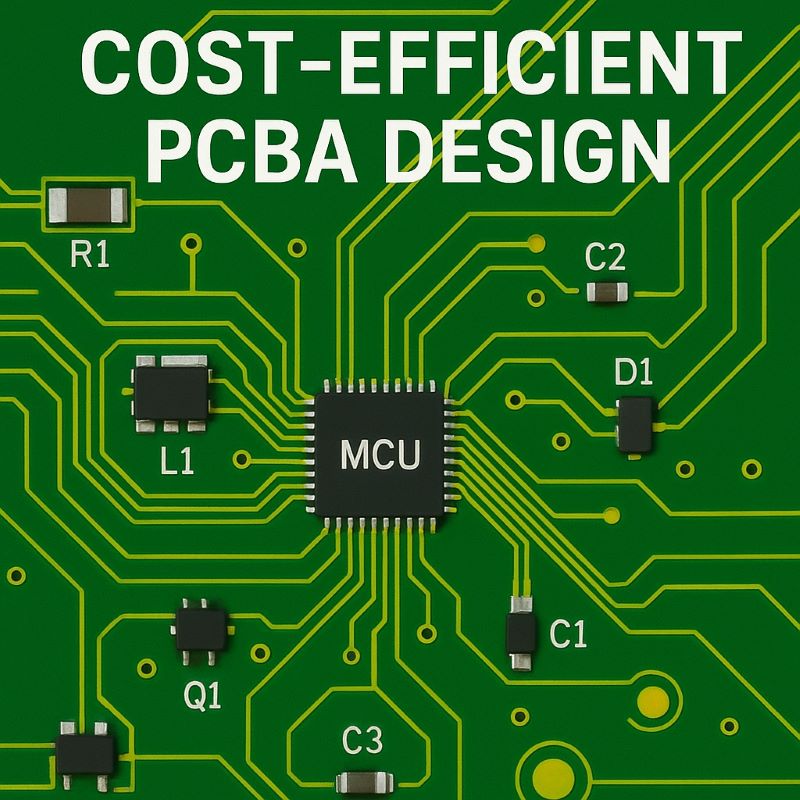
In the highly competitive world of disposable e-cigarettes, cost efficiency is not just a financial strategy—it defines a brand’s market survival. Every fraction of a dollar saved in component selection and manufacturing can translate into significant profit margins when scaled to millions of units. At RIMYI, our engineering team focuses on creating cost-optimized disposable e-cigarette PCBA solutions that deliver stable performance without compromising user safety or vaping experience. This balance between performance and affordability begins with understanding the electronic architecture, the selection of core components, and efficient circuit layout.
Balancing Performance and Price in Disposable Vape Design
A disposable vape may seem simple from the outside, yet the circuit design inside involves intricate power management, heating control, and sensor integration. Since the device has a short lifecycle, the PCBA must be low-cost, reliable, and power-efficient. However, cheap materials alone do not guarantee success. Instead, the key is to combine budget design principles with circuit efficiency strategies—maximizing performance per unit cost.
RIMYI’s engineers approach the design from a system optimization perspective. Every resistor, capacitor, and chip is evaluated not only for its price but also for its efficiency under thermal and electrical loads. By adopting smart BOM reduction and standardized component libraries, the company ensures both production consistency and long-term supply chain stability.
1. The Role of the Microcontroller Unit (MCU)
The MCU serves as the brain of the disposable vape PCBA. It controls heating activation, battery protection, and puff detection. For cost-sensitive applications, the ideal MCU must offer sufficient processing capability with minimal power draw. RIMYI typically adopts 8-bit or 16-bit low-cost MCUs with integrated ADCs and timers. These provide adequate performance for signal sampling and coil activation timing without unnecessary complexity.
Furthermore, through firmware optimization, our engineers reduce instruction cycles during idle states, lowering power consumption and extending battery life. The result is a lean and responsive circuit that maintains vaping consistency while keeping MCU costs under control.
2. Efficient Power Management for Low-Cost Designs
Power management ICs (PMICs) are essential in disposable vapes to regulate voltage, protect against over-discharge, and ensure smooth current delivery to the heating coil. However, traditional PMICs used in larger electronic devices are often over-specified for small vape systems.
RIMYI’s disposable e-cigarette PCBA solutions rely on simplified DC-DC step-up converters or low-dropout regulators (LDOs) that provide stable output from compact lithium batteries. Instead of using costly multi-phase controllers, single-phase switching circuits deliver sufficient efficiency for small-scale current loads.
To further enhance circuit efficiency, engineers apply low-RDS(on) MOSFETs to reduce conduction losses. These small changes, when replicated across thousands of production units, result in substantial BOM cost savings without degrading reliability.

3. Heating Element Control and Optimization
The heating coil represents the heart of any e-cigarette. While it is technically separate from the PCBA, its electrical characteristics directly affect board design. The control circuit must manage coil activation within tight thermal tolerances to ensure consistent vapor production.
RIMYI utilizes precision current sensing to balance power output and prevent overheating. By using low-cost, high-accuracy current-sense resistors, the control circuit monitors the coil’s performance in real time. Additionally, the integration of a PWM-based control strategy reduces the need for expensive analog feedback components, contributing to BOM reduction and improved temperature stability.
4. Battery Connection and Safety Components
Safety remains a top priority even in budget vape designs. Disposable e-cigarettes rely on compact lithium-ion or lithium-polymer batteries that demand protection circuits to prevent short circuits or over-discharge.
Instead of using multi-function protection ICs, RIMYI often integrates MOSFET-based discrete protection circuits. This modular structure lowers material costs and simplifies manufacturing. Additionally, NTC thermistors are selected to ensure thermal monitoring without adding unnecessary complexity. The combination of these low-cost components achieves the right balance between affordability and safety—a hallmark of RIMYI’s engineering philosophy.
5. Puff Sensor and Airflow Detection
The puff sensor is a small but critical part of the disposable vape PCBA design. It detects airflow and triggers the heating cycle. Traditional pressure sensors can be expensive and prone to false triggers, especially under variable humidity.
RIMYI employs cost-effective piezoresistive or differential pressure sensors optimized for miniature circuits. These sensors are paired with low-noise amplifiers and digital filtering algorithms to prevent misdetection. By refining the sensor calibration curve, we reduce component costs while maintaining high detection accuracy.
6. PCB Substrate Selection and Layout Efficiency
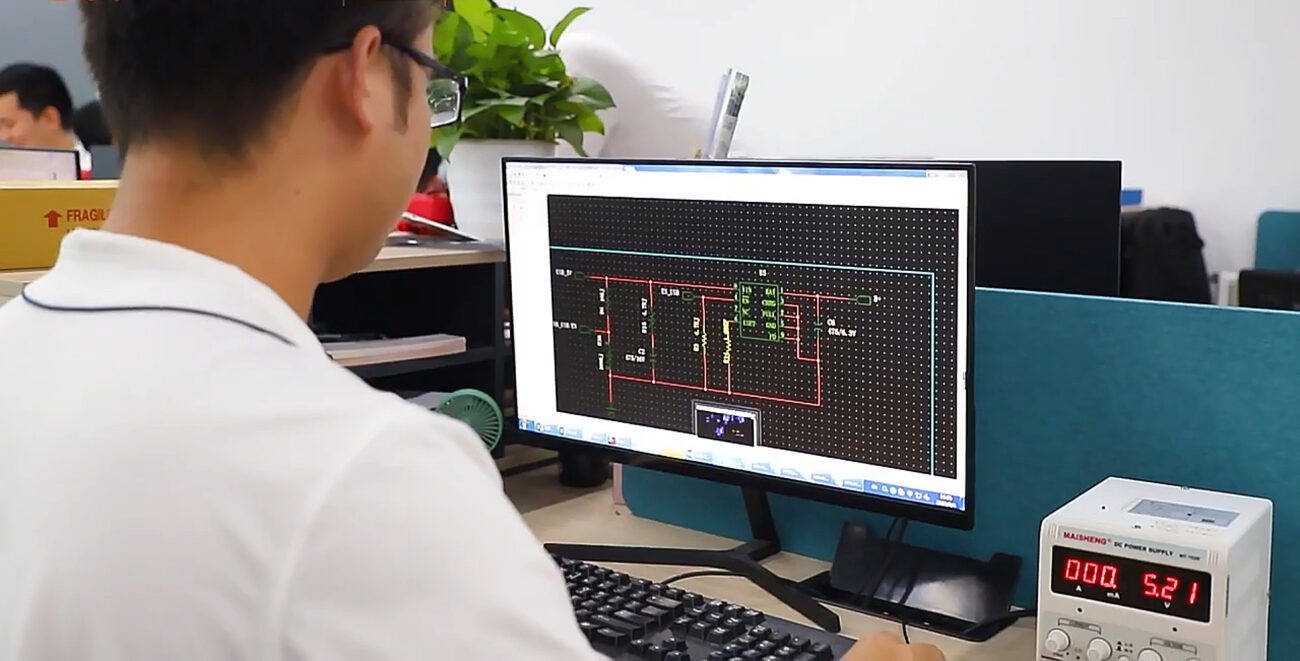
The printed circuit board itself plays a crucial role in overall cost and reliability. RIMYI prioritizes FR-4 substrates with high Tg ratings for heat resistance, which ensures durability during reflow soldering and real-world usage. However, the layout strategy is just as important.
By using two-layer PCB designs with optimized trace routing and ground plane sharing, RIMYI reduces copper usage and manufacturing steps. Additionally, DFM (Design for Manufacturability) guidelines are applied to minimize the number of vias, component overlap, and soldering defects. These layout optimizations significantly reduce production time and cost per unit.
7. Component Integration and Firmware Efficiency
Cost-effective PCBA design extends beyond physical materials—it also includes how components communicate. RIMYI integrates multi-function ICs wherever possible to reduce the total number of components on the board. For example, one chip might handle both voltage regulation and coil control, replacing two or more discrete parts.
Firmware is also optimized for memory efficiency. Compact code reduces flash requirements, allowing the use of smaller and cheaper MCUs. This approach reflects RIMYI’s focus on hardware-software co-optimization, where each design decision supports the goal of achieving high circuit efficiency with minimal resource overhead.
8. Manufacturing and Quality Control
Cost-effective doesn’t mean low quality. RIMYI’s production facilities use automated SMT lines with AOI (Automatic Optical Inspection) to maintain consistency in every unit. Each disposable e-cigarette PCBA undergoes functional testing for voltage output, coil activation time, and puff response.
Moreover, RIMYI maintains long-term partnerships with component suppliers to stabilize procurement costs and prevent material shortages. This ensures that even large-scale clients receive budget-friendly PCBA assemblies with predictable pricing.
9. BOM Optimization and Lifecycle Management
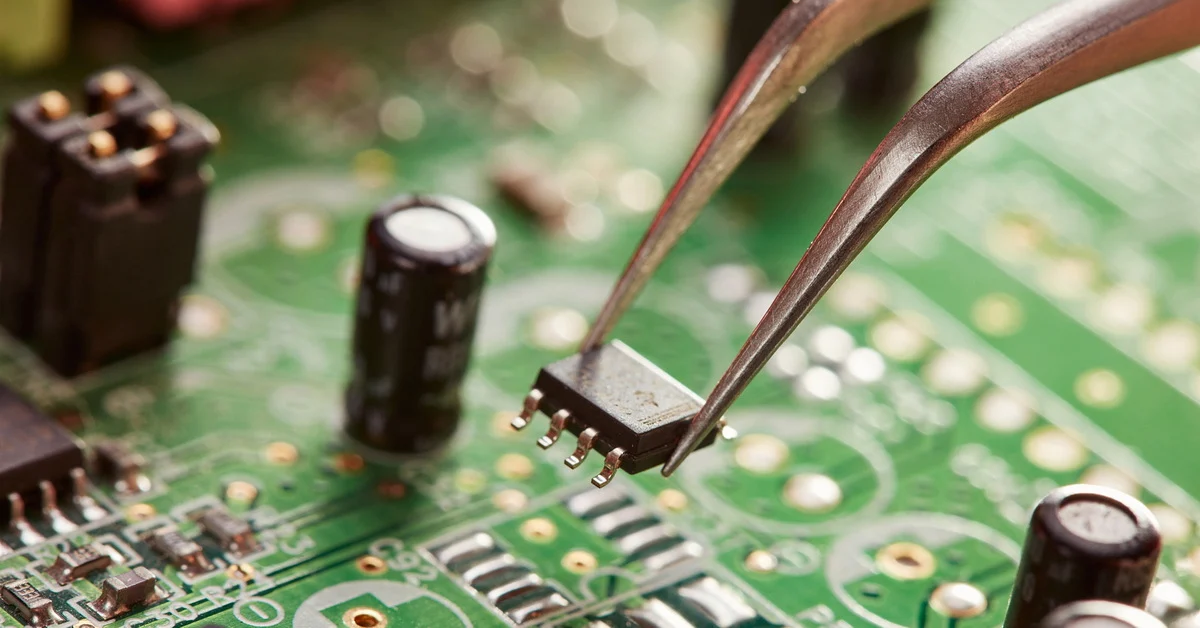
An often-overlooked factor in disposable vape design is BOM lifecycle management. Using components that are likely to remain in production for several years avoids redesign costs later. RIMYI engineers maintain a BOM database that tracks component availability and replacement equivalents.
When prices fluctuate, alternate suppliers or package types can be quickly qualified. This agile supply chain management minimizes procurement risks while keeping budget design goals intact. It also allows RIMYI to offer custom BOM adjustments for brands that want to fine-tune cost-performance ratios.
10. Environmental and Compliance Considerations
Even though disposable vapes are single-use devices, RIMYI recognizes the importance of sustainability. The company uses RoHS-compliant and halogen-free materials where possible, ensuring that cost-effective design aligns with global environmental regulations.
Through advanced PCB etching control and optimized solder paste usage, manufacturing waste is minimized. This approach not only supports environmental responsibility but also reduces production overhead, enhancing cost efficiency at every level.
11. The Importance of Collaborative Engineering
In RIMYI’s development process, collaboration between electrical engineers, materials experts, and production managers is essential. Each department evaluates the impact of proposed design changes on both performance and cost.
For example, a minor adjustment in trace width or resistor tolerance might reduce thermal losses, improving overall circuit efficiency. Similarly, strategic placement of components reduces assembly time, which translates directly into BOM reduction and improved production throughput.
This cross-functional workflow ensures that the final disposable vape PCBA meets both technical and commercial targets, delivering value to brand customers and end users alike.
12. From Prototype to Mass Production
During prototyping, engineers test multiple configurations of MCUs, coils, and sensors to determine the best cost-performance combination. Once the optimal layout is identified, RIMYI’s manufacturing system scales it into full production using automated process controls.
This seamless transition guarantees that every disposable vape board retains its electrical consistency. Additionally, modular testing systems enable rapid validation for customized firmware or coil parameters requested by clients.
By refining each step from design to delivery, RIMYI ensures that its disposable e-cigarette PCBA solutions remain competitive, scalable, and cost-effective for global markets.
Conclusion: Maximizing Value Through Smart Component Strategy
The true challenge in disposable vape design lies in balancing component cost and performance stability. A board that uses the cheapest parts may function initially, but risks inconsistency in mass production. On the other hand, excessive specification inflates the BOM unnecessarily.
RIMYI’s engineering philosophy is to pursue the optimal balance point—where performance, cost, and manufacturability meet. Through thoughtful selection of low-cost components, efficient power management design, and continuous BOM reduction, we deliver products that not only meet quality expectations but also support our clients’ profitability.
As the global disposable vape market continues to grow, this combination of budget design and technical precision will remain a key differentiator. RIMYI is committed to helping brands build reliable, cost-optimized vaping devices that redefine industry standards for efficiency, safety, and user satisfaction.