

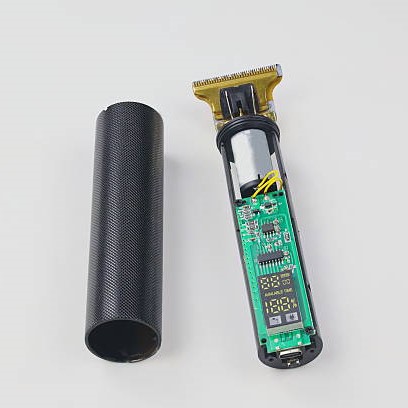
Designing high-performance, small-sized e-cigarette PCB modules demands exceptional precision within an extremely limited space. Engineers must carefully manage high-current power delivery while simultaneously protecting sensitive sensor signals. Therefore, the decision between a 2-layer and a 4-layer stackup becomes critical to overall device reliability. By selecting the right architecture, you can prevent performance glitches during rapid heating cycles and significantly improve electromagnetic compatibility (EMC). In the following sections, we explore how advanced layer stacking creates a more stable and efficient foundation for compact vaping devices.
1. The 2-Layer Limitation: Combatting Signal Interference
Although 2-layer PCBs remain cost-effective, they often struggle to meet the demands of modern, high-density vaping devices.
The Challenge of Tight Spaces
In a 2-layer configuration, designers must route both power and signal traces across the same limited surface area. As a result, high-current heating circuits frequently interfere with low-voltage control signals. Moreover, without a continuous ground plane, return paths become longer and less controlled. This creates unintended “loop antennas,” which actively radiate electromagnetic interference (EMI). Consequently, devices built on 2-layer boards may experience instability, especially under high-load or high-wattage conditions.
2. The 4-Layer Advantage: The Power of the Ground Plane
Adding internal layers transforms the electrical environment of a small-sized e-cigarette PCB module.
Complete Shielding and Isolation
A 4-layer design introduces a dedicated internal ground plane, which acts as an effective shield against external electrical noise. In addition, it provides the shortest and most direct return path for signals, improving overall circuit stability. As a result, EMI is significantly reduced, and unwanted crosstalk between components is minimized. Therefore, even during intense heating cycles and high-power operation, the device maintains consistent and reliable performance.
3. Boosting Sensor Sensitivity: Touch and Airflow
Modern vaping devices rely heavily on precise sensor feedback to deliver a smooth and responsive user experience.
- Touch Controls: A stable ground plane ensures consistent reference voltage for capacitive touch inputs, improving responsiveness.
- Airflow Sensors: Cleaner signal environments prevent false triggers, lag, or misfiring during use.
- Microcontroller Performance: Reduced electrical noise allows the MCU to process data accurately and efficiently.
Consequently, 4-layer PCB technology enhances the sensitivity and reliability of the entire system. Furthermore, it isolates delicate sensor signals from high-current battery surges, ensuring consistent vapor production and seamless operation.
By integrating a 4-layer stackup, you actively elevate the performance, stability, and user experience of your device. For brands aiming to develop premium, feature-rich small-sized e-cigarette PCB modules, this advanced design approach is not just beneficial—it is essential.
4. Performance Matrix for PCB Stackup
| Feature | 2-Layer PCB Design | 4-Layer PCB Design |
| EMI Shielding | Low (Susceptible) | High (Superior) |
| Signal Integrity | Moderate | Excellent |
| Heat Dissipation | Basic | Enhanced |
| Sensor Stability | Challenging | Highly Reliable |
Consequently, the 4-layer board offers a much higher safety margin for the end-user. Furthermore, the compact internal layers allow for even smaller product footprints. Therefore, moving to a 4-layer stackup is a strategic upgrade for any professional brand.
Conclusion: Building a Reliable Vaping Experience
Superior hardware starts with an optimized electromagnetic environment.
Stop risking your product’s reputation with noisy and unstable 2-layer circuit boards. Instead, embrace the signal clarity of professional small-sized e-cigarette PCB modules with 4 layers. Consequently, your devices will fire faster and last longer in the field. Experience the difference that precision PCB stacking makes for your high-tech hardware today. Your users deserve a consistent and safe experience with every puff.
For even more exciting content, check us out on Facebook!
Don’t forget to click the link below to follow us—be the first to get the latest updates so you never miss a beat!
🔗 [ RIMYI Facebook ]