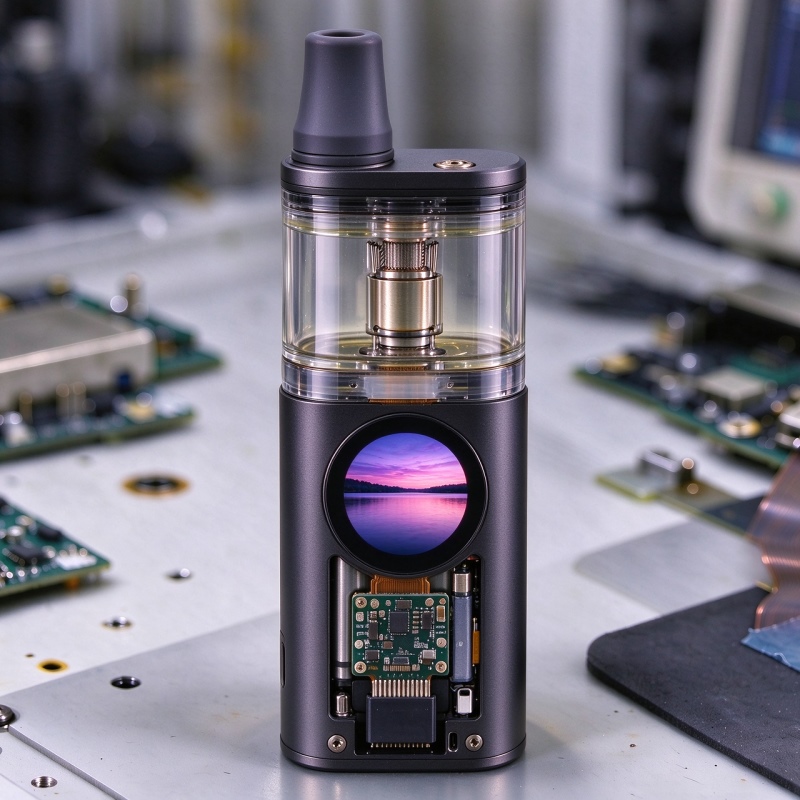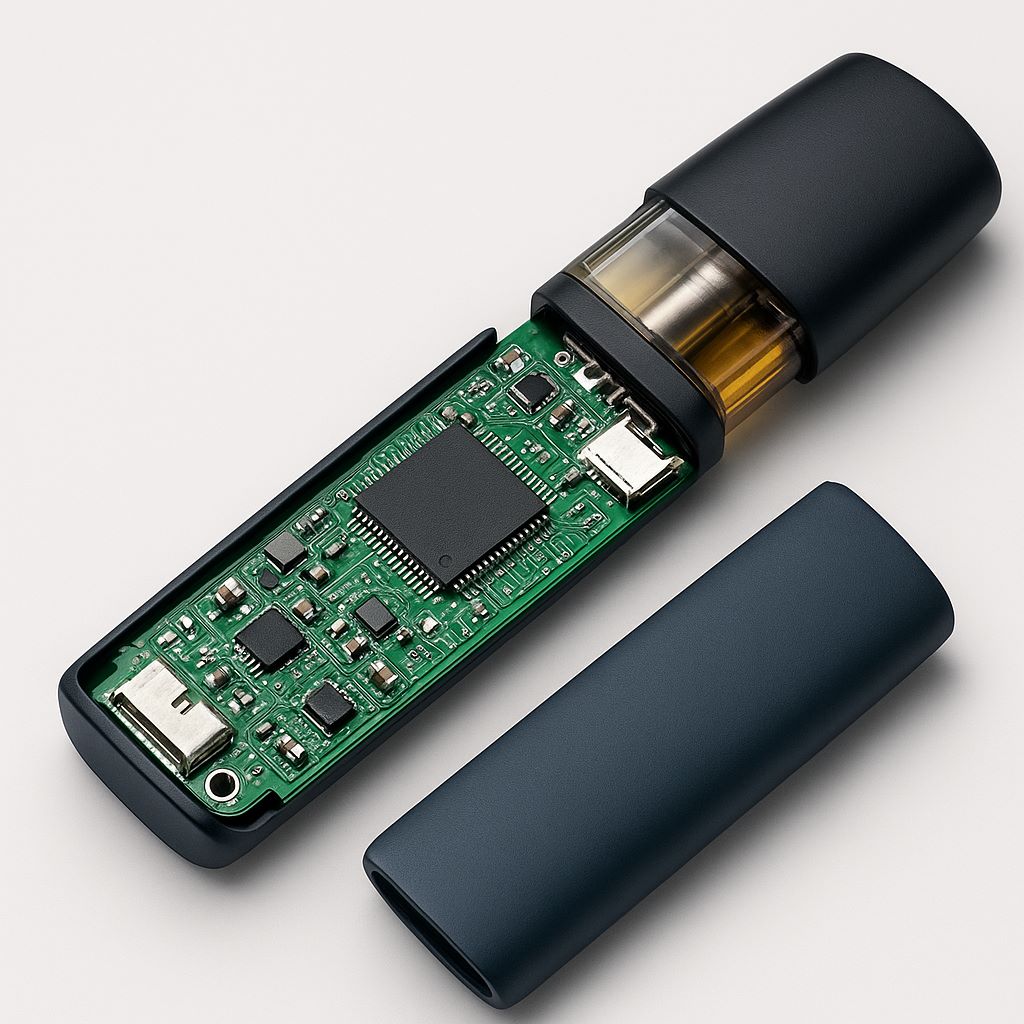

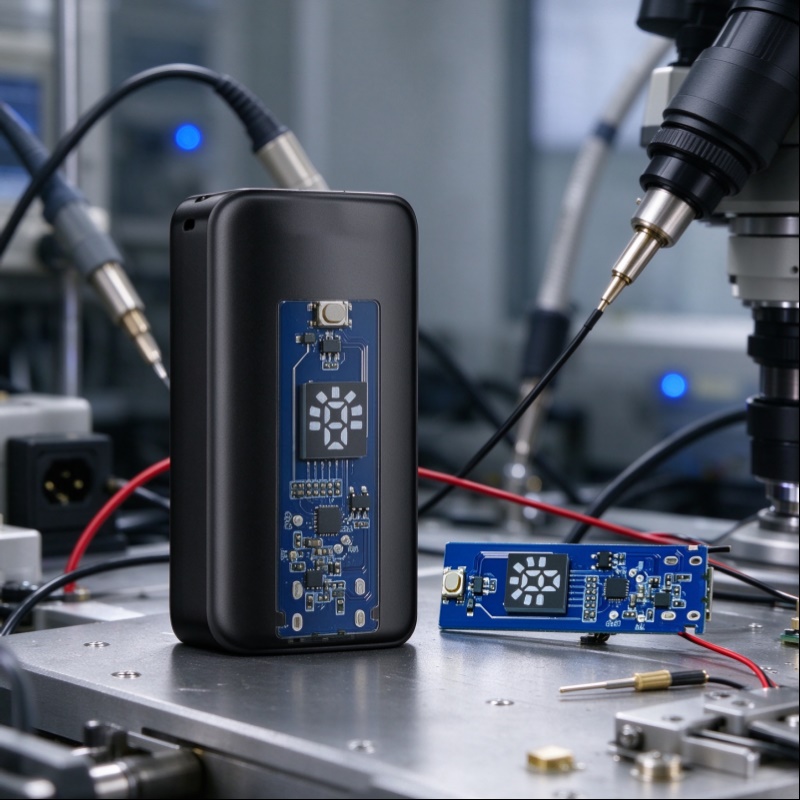
A smart CBD e-cigarette circuit board integrates adjustable voltage output with electronic control functions to support customized device configurations. The RMY001 model uses button-based voltage adjustment, allowing users to change output settings through physical controls. Meanwhile, an MCU control module processes button signals and coordinates the output module and digital display. This integrated design helps manufacturers combine power control, status monitoring, and protection functions within a compact circuit board.
For electronic device manufacturers, adjustable voltage is an important consideration when developing different product configurations. Instead of using a fixed output setting, a variable-voltage e-cigarette box can provide different adjustment options according to its circuit design. Furthermore, a digital display makes operating information easier to view, while button-based controls provide a straightforward interface. Therefore, integrating these functions into one PCB module can simplify the overall electronic architecture.
How Does the MCU Control Module Manage Output Functions?
The MCU serves as the main control component of the RMY001 circuit board. It receives signals from the button module, processes user input, and coordinates the output module according to the programmed control logic. In addition, the digital and LED display modules present relevant operating information, allowing users to view device status during operation. The smart CBD e-cigarette circuit board coordinates these control components through its MCU, helping manage communication between button inputs, power output, and display functions.
The main functional components include:
- MCU Control Module: Processes button signals and coordinates the operation of different circuit modules.
- Power Output Module: Controls the output function according to the programmed settings.
- Digital and LED Display: Presents operating information and adjustable output settings.
- Button Control Module: Detects button presses and sends corresponding signals to the MCU.
- Charging Management: Integrates charging-related control functions into the circuit design.
- Lithium Battery Control: Supports battery management and related protection functions.
Together, these components create an integrated e-cigarette power control unit. Moreover, combining signal processing and display functions on one board can help manufacturers simplify component coordination during product development.
What Protection Functions Are Integrated into the RMY001?
Protection functions are important considerations when designing electronic power control circuits. The RMY001 incorporates several protection mechanisms to manage abnormal electrical conditions and operating limits. These functions include short circuit protection, over-temperature protection, low-voltage protection, and a 10-second over-inhalation timeout function.
The main protection features include:
- Short Circuit Protection: Provides circuit protection when an abnormal short-circuit condition occurs.
- 10-Second Over-Inhalation Protection: Limits continuous activation according to the specified 10-second timeout.
- Over-Temperature Protection: Provides a protective response when the monitored temperature exceeds the configured limit.
- Low-Voltage Protection: Helps manage battery-related low-voltage conditions.
- Lithium Battery Protection: Integrates battery protection functions into the overall control circuit.
- Anti-Interference Design: Supports stable electronic operation within the intended device configuration.
In addition, integrating these functions into the control board allows engineers to coordinate protection logic with the MCU and power output module. However, final protection performance should be evaluated according to the completed circuit design and corresponding testing requirements.
RMY001 CBD E-Cigarette Circuit Board Specifications
Before selecting a circuit board for a customized project, manufacturers should review its dimensions, control functions, packaging method, and electrical characteristics. These details help engineers evaluate PCB integration and compatibility with the target device structure. The following table summarizes the available RMY001 specifications.
| Technical Parameter | RMY001 Specification |
|---|---|
| Product Name | CBD E-Cigarette Circuit Board |
| Model Number | RMY001 |
| Board Size | 41.1 × 14.0 mm |
| Quiescent Current | Less than 15 μA |
| Output Function | Adjustable Voltage Output |
| Control Method | Button-Controlled |
| Main Control | MCU Control Module |
| Display | Digital Display + LED Display |
| Charging Management | Integrated |
| Battery Management | Lithium Battery Control |
| Short Circuit Protection | Supported |
| Over-Inhalation Protection | 10 Seconds |
| Over-Temperature Protection | Supported |
| Low-Voltage Protection | Supported |
| Anti-Interference | Supported |
| Packaging Method | SMT Packaging |
The compact 41.1 × 14.0 mm structure provides flexibility for integration into different product layouts. The listed quiescent current of less than 15 μA serves as a reference specification for evaluating standby power consumption. However, actual current consumption may vary depending on battery conditions, circuit configuration, component selection, and operating environment. Therefore, manufacturers should verify the measured standby current under their intended application conditions. The adjustable voltage function and button-controlled interface also provide a foundation for customized control configurations. Nevertheless, the actual voltage adjustment range and output electrical limits should be confirmed according to the final project requirements.
How Does SMT Packaging Simplify PCBA Integration?
SMT packaging allows the circuit module to be directly soldered onto the main circuit board. As a result, manufacturers can integrate the module into larger PCBA assemblies without treating every control function as a separate component. This approach can simplify assembly processes and help improve production efficiency.
For businesses developing a CBD e-cigarette PCBA, module integration should be considered during the initial engineering stage. PCB dimensions, soldering requirements, electrical connections, and component placement all influence the final assembly structure. Furthermore, early coordination between the module supplier and the main PCB development team can help reduce unnecessary layout adjustments. A sensor-based e-cigarette control board may also be considered in projects requiring additional input detection. However, the RMY001 specifications describe button-signal detection rather than a dedicated sensor module. Therefore, any additional sensing functions should be evaluated separately during customization.
Why Choose a Custom E-Cigarette Circuit Board Solution?
Different manufacturers may have different requirements for voltage adjustment, display interfaces, board dimensions, and control functions. Therefore, selecting a suitable vape circuit board manufacturer involves evaluating engineering capabilities as well as the standard product specifications. A flexible customization process allows manufacturers to coordinate the circuit structure with their intended product design. A smart CBD e-cigarette circuit board can also serve as a foundation for customized PCBA development, allowing manufacturers to evaluate control functions, board dimensions, and integration requirements for different device designs.
RIMYI provides customized PCB and PCBA solutions for electronic device development projects. Available customization considerations include:
- Voltage Control Configuration: Discuss adjustable output requirements and corresponding control logic.
- PCB Dimensions: Adapt board layouts to the available internal installation space.
- Display Integration: Coordinate digital display functions and interface requirements.
- Button Control: Configure button input functions according to the intended operating interface.
- Protection Functions: Evaluate required circuit protection features and their implementation.
- SMT Assembly: Support module integration and assembly requirements for customized PCBA projects.
For OEM and ODM customers, discussing these requirements before production can help establish a clearer development plan. In addition, providing circuit diagrams, mechanical drawings, and electrical specifications can help engineers evaluate the feasibility of a customized solution.
Conclusion
A smart CBD e-cigarette circuit board combines adjustable voltage output, MCU-based signal processing, digital display functions, and integrated protection features within a compact PCB structure. The RMY001 model features button-controlled operation, an SMT packaging design, and a listed quiescent current specification of less than 15 μA, which should be verified under actual application conditions. Furthermore, its modular control architecture provides customization opportunities for voltage settings, display interfaces, and circuit configurations. By working with an experienced PCB manufacturer, businesses can develop electronic control solutions that better match their product dimensions and technical requirements.