

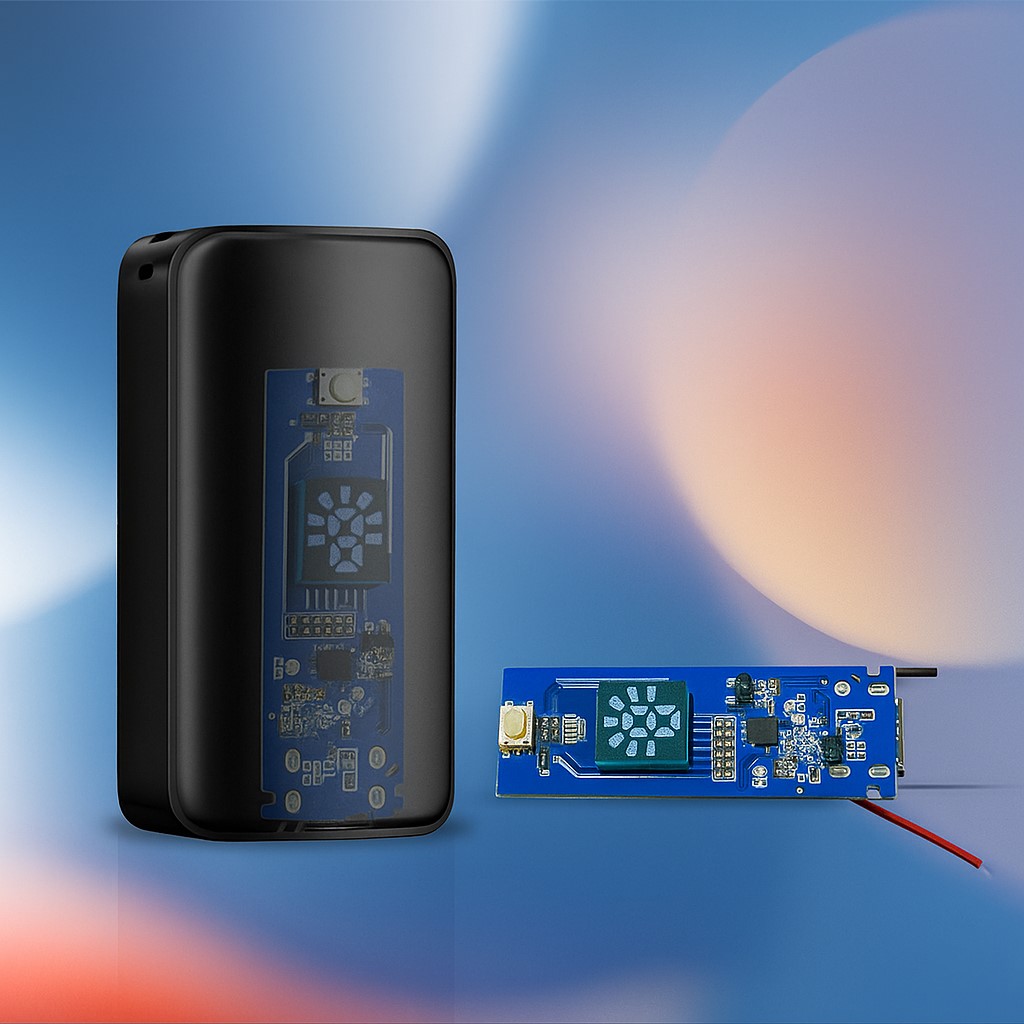
In the evolving landscape of vaping technology, efficiency is no longer limited to battery life or vapor output—it extends deep into the core of electronic design. At the heart of every disposable vape lies its printed circuit board assembly (PCBA), where intelligent circuit architecture determines not just how effectively the device functions, but also how reliable and safe it remains throughout its lifecycle.
Understanding the Core of Intelligent Circuit Design
Modern disposable vapes integrate advanced circuit architectures that optimize power usage, enhance sensory control, and improve temperature regulation. Each of these factors contributes to a more consistent and user-friendly vaping experience. Intelligent circuit design begins with the careful selection of low-power microcontrollers and power management units, which balance performance with energy efficiency.
Through these optimized architectures, designers ensure that each puff delivers stable vapor output without draining the battery unnecessarily. Moreover, intelligent circuits help maintain internal voltage and current stability, reducing overheating risks. This level of control not only protects the user but also extends product reliability—an essential factor in consumer satisfaction and brand reputation.

disposable vapes, ecigarette, electronic cigarettes, liquid vaporizers, tobacco
Efficiency as a Product of Design
In disposable vapes, where compact form factors and limited battery capacity are defining constraints, efficiency must come from within. Every millimeter of PCB space counts, and so does every microamp of current. Intelligent circuit architecture allows engineers to reduce redundant pathways, streamline current flow, and ensure that components communicate seamlessly through minimal energy loss.
For disposable vape PCBA solutions, design optimization is not merely aesthetic—it’s functional engineering. By integrating AI-assisted power regulation and adaptive heat control, the circuits actively manage the distribution of power according to the coil’s resistance and the battery’s condition. This dynamic regulation ensures consistent vapor output across the lifespan of the device, enhancing both the sensory and operational experience.
Safety and Stability Through Smart Design
Disposable vapes are expected to be simple yet safe. Intelligent circuit architecture enables this balance by embedding automatic protections directly into the PCB. Short-circuit prevention, reverse polarity protection, and overcharge detection are common examples of such built-in safety mechanisms.
However, advanced designs go further. Some boards feature integrated fault detection systems that monitor resistance changes or identify potential moisture exposure in real time. When anomalies occur, the circuit automatically shuts off or limits current to prevent damage. These features, while invisible to users, are vital in maintaining product safety under varying environmental conditions.
multiple-layered PCB designs that isolate high-current areas from control circuits, reducing electromagnetic interference and improving signal integrity. Such separation not only enhances safety but also contributes to smoother performance under diverse operating conditions.
Thermal Management and Energy Optimization
Heat management remains a critical design challenge for disposable vapes. Poorly managed circuits can lead to coil degradation, flavor inconsistencies, or even device failure. Intelligent architecture mitigates these issues by integrating real-time temperature sensing and feedback loops. These sensors adjust power output dynamically to maintain the ideal heating curve.
Additionally, low-power firmware algorithms optimize current usage without compromising vapor quality. Through these precise energy management techniques, disposable vapes achieve improved runtime, stable heating, and safer performance—all within the limitations of a small, sealed housing.
The Integration of Smart Control Algorithms
As vaping devices evolve, microcontrollers within disposable vapes are becoming more intelligent. These embedded systems manage not only activation timing but also puff duration, airflow sensitivity, and user behavior analytics. Intelligent control firmware allows brands to fine-tune the user experience while ensuring consistent product quality.
By embedding predictive power control and adaptive resistance compensation, their PCBA boards deliver more precise performance control and longer battery life. These innovations bridge the gap between disposable convenience and intelligent device sophistication.
Material Selection and Structural Optimization
A truly efficient design also depends on the materials used. High-quality copper traces, low-resistance vias, and thermally conductive substrates all enhance circuit efficiency.
Additionally, compact component layouts and advanced soldering technologies enhance heat dissipation while minimizing parasitic capacitance. These design decisions collectively contribute to better electrical stability and mechanical durability—critical attributes for disposable vapes expected to perform flawlessly under consumer use.
Environmental Considerations in Disposable Vape Design
Efficiency in design today also implies environmental responsibility. Intelligent circuit architecture plays an important role in reducing material waste and improving recyclability. By using modular and lead-free components, manufacturers can simplify disassembly and recycling processes at end-of-life stages.
Testing and Quality Assurance
Before any disposable vape PCBA leaves the production line, rigorous reliability tests ensure that intelligent design translates to real-world performance. Simulated puff cycles, temperature stress tests, and voltage fluctuation assessments validate the board’s consistency under operational conditions.
By maintaining strict testing standards, each circuit not only meets but exceeds industry expectations. The data gathered during these evaluations also drives iterative improvements in future design cycles, creating a feedback loop of continuous innovation.
The Future of Intelligent Circuit Architecture in Disposable Vapes
As disposable vape technology matures, circuit efficiency will remain a competitive advantage. Future developments are likely to integrate even smaller, more efficient components and smarter control logic capable of predicting user behavior and adapting performance dynamically.
A future where disposable vapes offer the intelligence and reliability of larger, rechargeable systems—without sacrificing compactness or cost efficiency. Intelligent circuit architecture will continue to serve as the foundation of this evolution, bridging the gap between user satisfaction, safety, and sustainability.
Conclusion
The evolution of disposable vapes has reached a point where design is the true measure of efficiency. Intelligent circuit architecture enables manufacturers to balance performance, safety, and sustainability within the tight constraints of compact, single-use devices. Through innovations in power management, thermal control, and material selection, RIMYI continues to redefine the boundaries of electronic vape PCB design.
As the market advances, these intelligent architectures will not only enhance device reliability but also guide the entire vaping industry toward smarter, safer, and more efficient solutions—proving that in modern design, efficiency is not just achieved, it is engineered.