

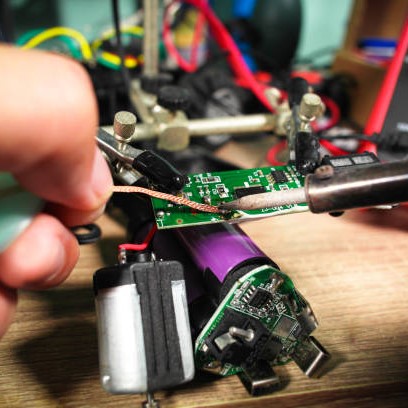
In the fast-evolving landscape of electronic vaporizers, the race for higher wattages, denser vapor production, and advanced flavor profiles has placed unprecedented demands on device internals. As hardware configurations push cell discharge rates to their physical limits, safety can no longer be treated as a secondary feature or an afterthought. For hardware brands, procurement managers, and device distributors, a single failure in the field can devastate a brand’s reputation overnight.
Building an enduring product requires constructing a comprehensive safety “immune system.” This engineering architecture relies on multi-layer e-cigarette hardware protection to isolate, contain, and neutralize electrical faults before they escalate into hazardous failures. This guide details how independent hardware-level comparisons, precise physical thresholds, and robust charging management create a reliable foundation for modern, safe high-power e-cigarettes.
1. The Five-Tier Core Protection Architecture
A truly resilient e-cigarette mainboard does not rely on a single defensive line. Instead, it deploys a specialized array of sensors, microcontrollers, and discrete physical switches designed to monitor every phase of the device’s operational cycle:
| Protection Mechanism | Exact Trigger Condition | Automated Response System | Implementation Level |
| Short Circuit Protection (SCP) | Load resistance drops <0.7 Ω | Instantaneous isolation of the output loop (<10μS) | Dedicated Hardware Comparator |
| Over-Temperature Protection (OTP) | Internal board temperature >85 ℃ | Automatic power reduction or complete system shutdown | Hardware Thermistor + MCU Loop |
| Under-Voltage Lockout (UVLO) | Battery cell drops <3.0 V | Disables firing cycles to prevent deep-discharge damage | Hardware Voltage Divider / MCU |
| Over-Vaping Cut-Off Protection | Single continuous puff >10 Seconds | Gracefully terminates current output to avoid coil burn | Software Timer Interrupt |
| Over-Charge Protection (OVP) | Cell voltage exceeds >4.25 V | Cuts off external power flow at the charging gateway | Dedicated Charger IC |
2. Hardware vs. Software Protection: The Last Line of Defense
When engineering a high-power e-cigarette system, a fundamental architectural choice must be made: should safety mechanisms be managed by software firmware running on the MCU, or executed by standalone, hardwired analog circuits?
  Software Defenses:  [Fault Detected] ──> [MCU Processes Code] ──> [Firmware Crash/Freeze] ──> ❌ System Failure
  Hardware Defenses:  [Fault Detected] ──> [Analog Comparator]  ──> [Direct Gate Disconnect] ──> ♻️ Safe Isolation
Relying entirely on software creates a significant vulnerability. Under intense thermal loads, strong electromagnetic interference (EMI) from the switching regulators, or unexpected memory buffer overflows, an MCU’s software execution loop can lock up, freeze, or crash. If a short circuit occurs while the firmware is unresponsive, the device will continue to dump current into the load, running a high risk of catastrophic thermal runaway.
Advanced mainboards eliminate this risk by implementing independent hardware-level protection. Mechanisms like short circuit protection vape circuitry utilize dedicated analog hardware comparators that run entirely in parallel to the main CPU.
These comparators constantly monitor the voltage drop across the firing MOSFETs. If the resistance plunges below the 0.7 Ω threshold, the analog circuit bypasses the MCU completely and forces the driver gate closed in under 10 microseconds. This hardwired bypass acts as an un-freezable, failsafe line of defense that keeps the device safe even if the primary software completely locks up.
3. Safe Energy Management: 1.5A Fast Charging Design
Modern consumers expect rapid charging speeds, making a 1500mA (1.5 A) fast-charging rail a highly desirable feature for high-capacity vaporizers. However, moving high current through a compact chassis introduces clear thermal and chemical challenges that require careful engineering.
                         Premium 1.5A Energy Matrix:
   ┌──────────────────────────────────────────────────────────────────┐
   │ Power Input: Type-C 5V/1.5A Intelligent Current Regulation       │
   ├──────────────────────────────────────────────────────────────────┤
   │ Thermal Interlock: Dual-NTC Temperature Probes Mounted on Cell   │
   ├──────────────────────────────────────────────────────────────────┤
   │ Cell Selection: Premium 3C/5C High-Discharge Lithium-Ion Cells   │
   └──────────────────────────────────────────────────────────────────┘
-
Thermal Management During Charge Cycles: Pumping 1.5A into a small lithium cell generates heat. It increases the temperature in the battery. It also heats the charging IC. To control this, the system uses thermal scaling. The charging architecture actively monitors PCB temperature. If the temperature approaches the safety threshold, the system reacts. It reduces the current from 1.5A to 500mA. This protects internal components during charging. It continues protection until the temperature stabilizes.
-
Strict Battery Cell Procurement Criteria: High-power configurations should never be paired with low-tier, standard-discharge cells. For safe deployment, independent brands must pair their boards with premium, high-discharge lithium-ion cells rated for 3C or 5C performance. These high-rate batteries feature lower internal resistance (A_R), meaning they generate significantly less heat during both high-wattage output cycles and 1.5A fast-charging sessions.
4. Global Compliance and Safety Certification Standards
Navigating international markets requires strict adherence to global safety testing and certification frameworks. A high-power e-cigarette device can only clear customs and find long-term commercial success if its underlying mainboard architecture meets rigorous compliance benchmarks:
                  Global AV/Consumer Electronics Compliance:
   ┌───────────────────────┬───────────────────────┬───────────────────────┐
   │     CE Mark (EU)      │     FCC Part 15       │    RoHS Directive     │
   ├───────────────────────┼───────────────────────┼───────────────────────┤
   │ Mandates absolute     │ Restricts unwanted    │ Eliminates hazardous  │
   │ operational stability │ electromagnetic EMI   │ substances like lead, │
   │ under heavy electrical│ emissions from high-  │ cadmium, and poly-    │
   │ and thermal fault     │ frequency switching   │ brominated biphenyls  │
   │ conditions.           │ regulators.           │ from all PCB solders. │
   └───────────────────────┴───────────────────────┴───────────────────────┘
-
The Importance of UL 8139 Testing: For brands targeting North American retail markets, UL 8139 compliance offers a strong competitive advantage. It helps products stand out in safety-driven procurement. UL 8139 tests full system safety performance. It evaluates charging, battery, and electrical protection systems. It also simulates severe stress conditions.
Therefore, engineers must design for full protection coverage. They should implement OTP, UVLO, and SCP safeguards. These protections improve system stability under load. As a result, products pass premium safety audits more easily. In addition, distributors gain stronger confidence in field reliability. This supports long-term retail and channel adoption.
Conclusion: Formulating Safety as a Premium Asset
In consumer electronics, safety defines long-term brand value. Premium products require reliable engineering protection systems. Do not rely only on software fault detection loops. Unoptimized mainboards increase electrical failure risks. Moreover, unstable systems damage brand reputation quickly. RIMYI uses an advanced multi-layer hardware protection architecture. This design actively improves electrical safety performance. As a result, users experience fewer operational failures.
Furthermore, reliable protection reduces costly retail returns. It also strengthens product quality in global markets. Our engineering team reviews product schematics professionally. We help brands build stable, unfreezable safety systems. Contact RIMYI today for your next high-power project.