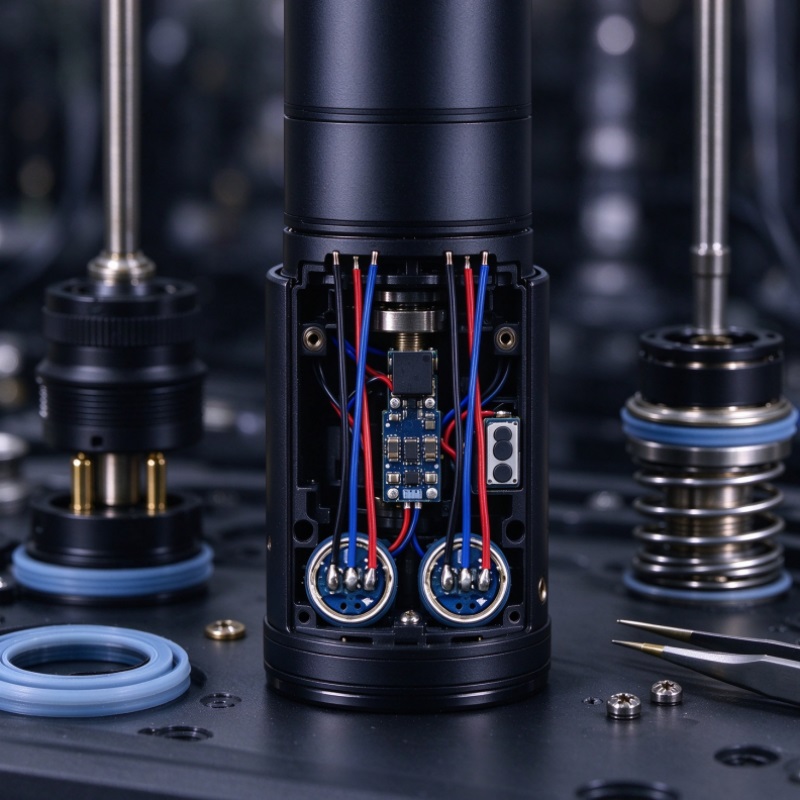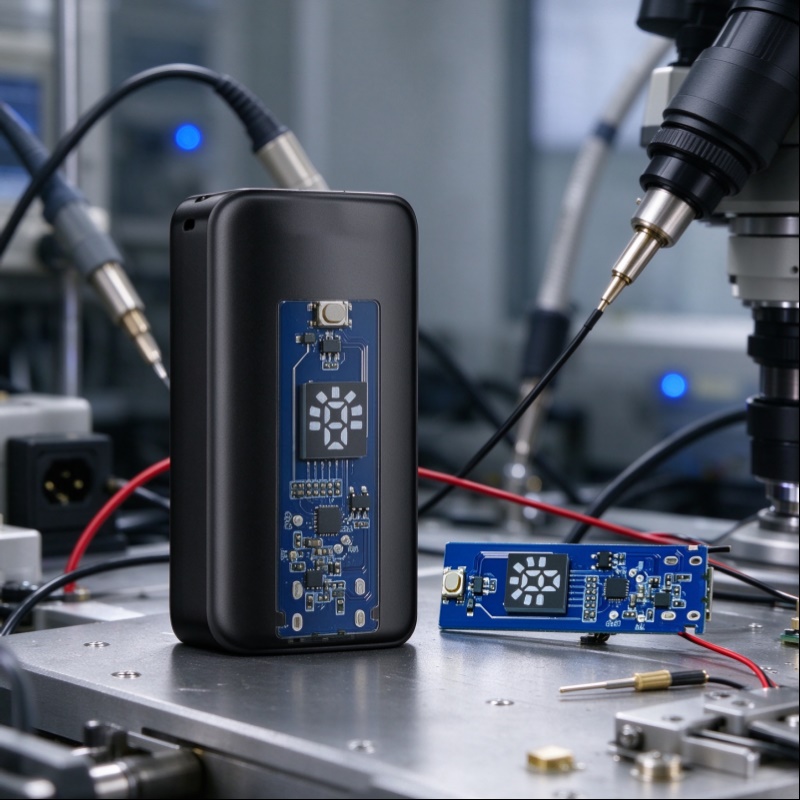

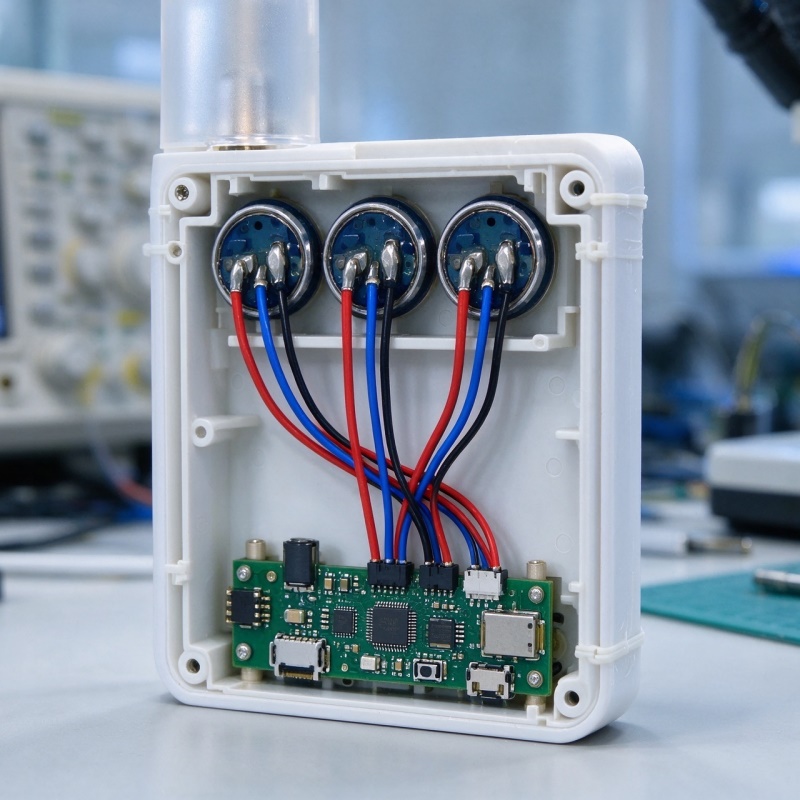
Accurate puff detection is an important part of modern electronic cigarette control systems. A reliable vape airflow sensor detects inhalation signals and converts them into electrical signals that the control circuit can process, helping devices respond consistently to user operation. In addition to detection accuracy, manufacturers must consider power consumption, circuit stability, component size, and built-in protection functions when developing compact vaping devices. An integrated sensor solution can address these requirements while simplifying product design and supporting different customization needs.
How Does an Airflow Sensor Improve Puff Detection?
An airflow detection system identifies changes associated with inhalation and converts the detected microphone signal into a control signal. In the R801AN14-Lxx-OP-150 design, the controller uses an ASIC-based architecture to process the signal and maintain stable operation. This approach supports accurate puff detection while reducing the number of peripheral components required by the application circuit. Therefore, a well-integrated vape airflow sensor helps manufacturers achieve consistent puff detection while simplifying the overall control circuit.
Moreover, consistent signal processing helps the electronic device respond more reliably during normal operation. The sensor is designed to resist air leaks, oil leaks, and backflow, supporting reliable measurements of low differential pressures. Consequently, manufacturers can integrate the detection function into compact electronic cigarette designs without requiring a complicated peripheral circuit.
Why Is ASIC Architecture Important for E-Cigarette Control?
The controller chip adopts an ASIC design rather than relying on a complex external control arrangement. This architecture provides a stable working state and helps reduce common MCU-related failures, while keeping the peripheral application circuit simple and cost-effective. For manufacturers developing a sensor-based e-cigarette control board, this integration can simplify circuit design and support more efficient product development.
A dedicated vape ASIC can also help combine signal processing and protection functions within a compact solution. As a result, product developers can focus on the overall control system, electrical compatibility, and device structure instead of adding unnecessary peripheral components. This is particularly useful when designing small electronic devices with limited PCB space.
Which Protection Functions Support Reliable Device Operation?
Beyond puff detection, the controller integrates several protection functions to support stable operation during use. These functions help manage inhalation duration, circuit conditions, and temperature-related operation. In addition, its short-circuit protection and overheating protection functions provide further control at the circuit level.
The main integrated functions include:
- Short-circuit protection (SCP): Provides a protection function for short-circuit conditions.
- Inhalation time protection: Applies a defined time limit to prevent inhalation periods from exceeding the configured duration.
- Overheating protection (OTP): Provides temperature-related protection for the electronic system.
- Low-power operation: Helps reduce power consumption in compact, battery-powered devices.
- Anti-interference capability: Supports stable signal processing in the surrounding electronic environment.
Together, these functions help manufacturers develop control systems with integrated detection and protection capabilities. Furthermore, combining these features within the controller can reduce the need for additional peripheral circuitry.
How Does Low Power Consumption Benefit Compact Vaping Devices?
Power efficiency is an important design consideration for portable electronic products. A controller with low static current can help reduce the power required during standby operation, supporting more efficient use of the device’s battery. The R801AN14-Lxx-OP-150 also features a compact physical structure, making it suitable for electronic cigarette designs where available installation space is limited. In this context, a low-power vape airflow sensor can support compact device designs while maintaining essential sensing functions.
In addition, its simple peripheral circuit helps reduce component requirements and supports a cost-effective overall design. The sensor’s small form factor allows product developers to consider different PCB layouts while maintaining the required signal detection and protection functions. Therefore, it can be considered for compact devices that require integrated sensing and control capabilities.
Technical Specifications of R801AN14-Lxx-OP-150
The following table summarizes the available mechanical and electrical specifications. Values marked as unspecified are not provided in the product documentation and should be confirmed during technical evaluation.
| Category | Parameter | Specification |
|---|---|---|
| Model | Product model | R801AN14-Lxx-OP-150 (±50) PA |
| Appearance | Surface material | White oil-proof film |
| Dimensions | Diameter | 6 ± 0.1 mm |
| Dimensions | Height | 2.5 ± 0.2 mm |
| Power | Low power consumption | Below 5 μA |
| Electrical | VBAT working voltage | Min. 2.4 V / Typ. 3.7 V / Max. 4.2 V |
| Electrical | Iq static current | Min. 1 μA / Typ. 3 μA / Max. 5 μA |
| Electrical | Rdson switching tube conduction impedance | Typ. 80 mΩ |
| Electrical | Iled LED output current | Not specified |
| Electrical | VAT constant average voltage output | Not specified |
| Electrical | Rload output maximum load capacity | Not specified |
| Protection | Short-circuit protection | SCP |
| Protection | Inhalation time protection | 10 seconds |
| Protection | Overheating protection | OTP |
| Protection | Tsd overheating protection threshold | Not specified |
| Timing | TSMOKE smoking timeout | Typ. 10 seconds |
| Performance | Anti-interference ability | Strong |
| Circuit design | Peripheral application circuit | Simple and cost-effective |
How Can Manufacturers Integrate the Sensor into Custom PCBA Solutions?
For electronic cigarette manufacturers, sensor selection is closely connected to the overall PCBA design. The e-cigarette sensor PCBA module must work with the device’s signal processing, power supply, and protection requirements. Therefore, developers should evaluate electrical parameters, installation dimensions, circuit layout, and functional compatibility before confirming a design.
A suitable integration process generally involves several steps:
- Define detection requirements: Confirm the expected puff detection behavior and signal processing requirements.
- Evaluate electrical compatibility: Review the operating voltage, static current, and relevant electrical characteristics.
- Plan PCB integration: Consider the sensor dimensions, component placement, and peripheral circuit layout.
- Review protection functions: Confirm the required short-circuit, inhalation time, and overheating protection behavior.
- Conduct design verification: Evaluate the integrated solution under the intended device operating conditions before mass production.
This process helps manufacturers align the sensing component with the complete control system. It also provides a clearer technical basis for product development and customization.
OEM and ODM Customization Support from RIMYI
Different electronic cigarette products may require different sensing characteristics, PCB structures, and control functions. RIMYI supports OEM and ODM customization discussions for customers developing electronic cigarette control boards and related PCBA products. By considering the application requirements, electrical specifications, and installation constraints together, manufacturers can work toward a sensor solution that fits their intended product architecture. For projects involving a sensor-based e-cigarette control board or a complete PCBA assembly, technical coordination is important from the early design stage. Manufacturers can discuss component integration, circuit requirements, and application-specific development needs to establish a suitable design direction. This approach helps connect individual sensing components with the broader product development process.
Conclusion
Reliable puff detection depends on consistent signal processing, suitable circuit integration, and effective protection functions. The R801AN14-Lxx-OP-150 combines ASIC-based control, low-power operation, compact dimensions, and multiple on-chip protection features to support electronic cigarette applications. For manufacturers developing customized control boards and PCBA solutions, selecting a suitable vape airflow sensor is an important step toward achieving stable device operation and efficient circuit design.