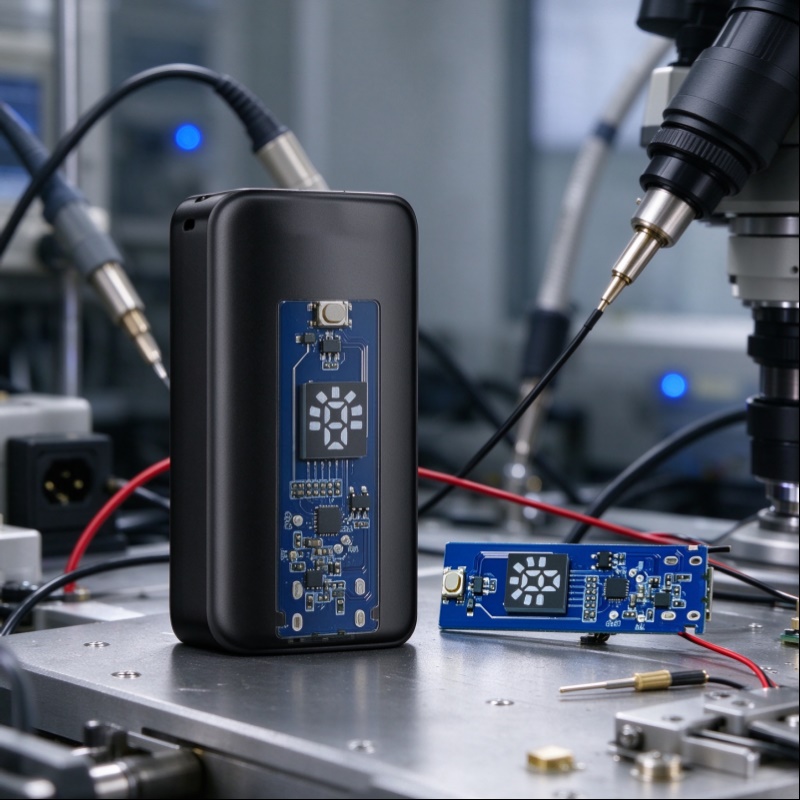

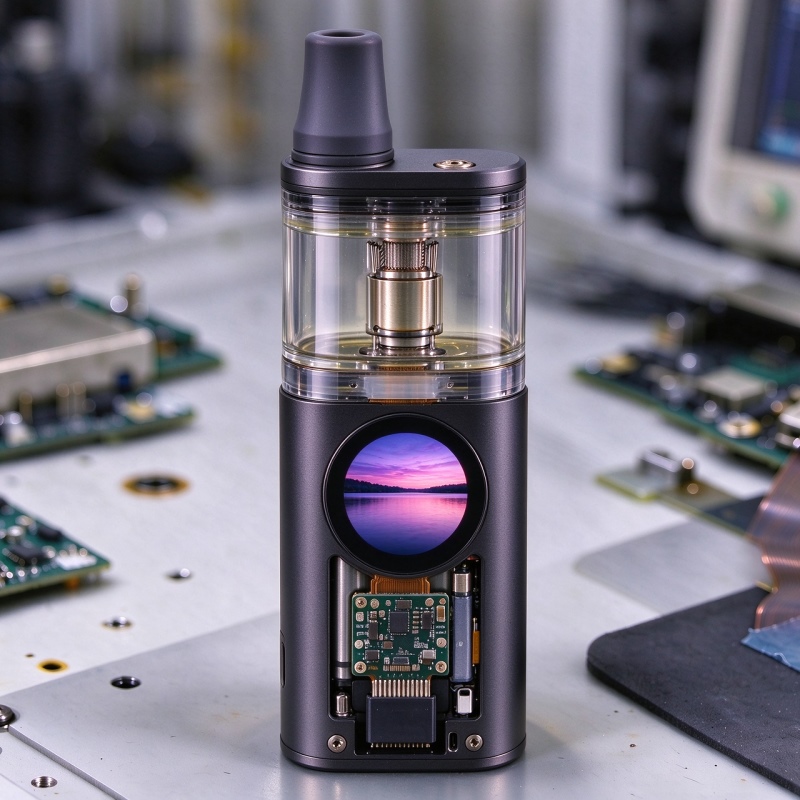
A compact e-cigarette battery display module helps manufacturers integrate battery information into small electronic devices without taking up excessive internal space. As product designs become more compact, display components must balance screen visibility, power consumption, and installation flexibility. The 0.99-inch TFT battery display board addresses these requirements through its compact PCB structure and integrated display design. Moreover, its high-brightness color screen provides clear battery information while maintaining a small installation footprint.
For manufacturers developing miniature devices, every millimeter of internal space matters. Therefore, selecting a suitable display module can simplify PCB layout planning and provide more flexibility for other electronic components. In addition, a compact display with low power consumption helps manufacturers balance visual performance and overall power requirements. This makes the module suitable for OEM and ODM projects that require customized display solutions.
How Does a 0.99-Inch TFT Display Improve Battery Visualization?
The compact e-cigarette battery display module provides a visual interface for displaying battery percentage, voltage, and other working status information through its 0.99-inch TFT screen. Its 350 cd/m² brightness supports clear visibility under different lighting conditions, while the color display allows manufacturers to create more intuitive user interfaces. Furthermore, the screen uses the ST7735P3 display IC and supports an SPI interface for communication with the main control unit. As a result, manufacturers can integrate battery information into their device interfaces through a compact display solution.
The main display advantages include:
- Compact Screen Structure: The small panel size helps reduce the space required for display installation.
- High Display Brightness: A brightness rating of 350 cd/m² supports clear visual information.
- Low-Power Operation: The display design helps manage power consumption in compact electronic devices.
- Fast Refresh Performance: Supports responsive visual updates for battery information and working status.
- Custom Interface Design: Screen layouts, icons, and battery alerts can be adapted to different product requirements.
In addition, the color display provides greater flexibility for interface development compared with basic monochrome indicators. Manufacturers can organize battery information and visual elements according to their product design and user interface requirements.
What Technical Specifications Should Manufacturers Consider?
Before integrating a display module into a new product, manufacturers should evaluate its screen dimensions, resolution, operating voltage, interface, and temperature range. These parameters directly affect PCB layout, electrical compatibility, and display integration. The following table summarizes the technical specifications of the 0.99-inch TFT battery display board.
| Technical Parameter | Specification |
|---|---|
| Model Number | N099-1211KBWPG11 |
| Resolution | 96 × 54 |
| Visible Area | 24.36 × 21.89 mm |
| Display Color | White |
| Display IC | ST7735P3 |
| Module Thickness | 1.5 mm |
| Number of Pixels | 128RGB × 115 |
| Panel Size | 25.25 × 27.14 × 1.86 mm |
| Driving Voltage | 2.5–3.3V |
| Backlight Type | Glue-Iron Integrated |
| Backlight Voltage | 3.0V |
| Brightness | 350 cd/m² |
| Operating Temperature | -20°C to +70°C |
| Storage Temperature | -30°C to +80°C |
| Interface | 4-SPI / MCU |
These specifications help engineers assess whether the module matches their PCB dimensions and electrical design. For example, the 2.5–3.3V driving voltage and 4-SPI/MCU interface are important considerations when planning the main control board connection. Meanwhile, the compact panel dimensions allow designers to optimize internal component placement. However, final compatibility should be evaluated against the complete device circuit and mechanical structure.
How Does SPI Interface Support Flexible PCB Integration?
The SPI interface provides a communication connection between the display module and the main control unit. This allows the screen to receive display instructions and update visual information according to the programmed interface. Consequently, manufacturers can incorporate battery percentage, voltage indicators, icons, and other visual elements into their product designs. In addition, a flexible PCB layout gives engineers more options when arranging display components within limited internal spaces. For projects requiring a custom vape PCBA board, display compatibility should be considered during the early PCB development stage. Engineers can evaluate the module dimensions, interface requirements, and electrical specifications before finalizing the circuit layout. Furthermore, early integration helps reduce unnecessary design adjustments during product development.
Why Choose a Custom Display Module for OEM and ODM Projects?
Different product designs may require different screen layouts, display elements, and PCB configurations. A standard vape display can provide basic battery information, while a customized interface can offer more flexibility in how information is presented. Therefore, manufacturers should consider display customization when developing products with specific appearance and functional requirements.
A suitable e-cigarette PCBA supplier should be able to support communication interface evaluation, PCB integration, and display layout customization. Similarly, smart e-cigarette PCB design requires coordination between the display module, control circuit, and overall product structure. By considering these elements together, manufacturers can develop more integrated electronic designs.
RIMYI supports OEM and ODM customization for display-related PCB projects. Available customization considerations include:
- Display Interface: Adjust screen layouts, icons, and battery indicators according to project requirements.
- PCB Integration: Adapt component placement and board layouts to different product dimensions.
- Display Appearance: Coordinate visual elements with the overall product interface.
- Electrical Compatibility: Evaluate voltage and communication requirements for the target circuit.
- Project Development: Provide engineering support for product-specific display integration.
For businesses working with a vape circuit board manufacturer, these customization options can help align display components with the intended product structure and production requirements. Moreover, coordinated development can simplify communication between display suppliers and PCB engineering teams.
How Can a Compact Display Support Long-Term Product Development?
A well-designed display module should provide consistent visual performance while fitting the electrical and mechanical requirements of the finished product. Its slim structure and compact dimensions help manufacturers develop smaller devices without sacrificing the availability of battery information. Meanwhile, the TFT color screen offers a flexible foundation for different interface layouts and visual elements. Consequently, this type of display module can support product development projects that prioritize space efficiency and customized user interfaces. When evaluating a display solution, manufacturers should consider not only screen size but also brightness, driving voltage, interface compatibility, and temperature requirements. By reviewing these factors together, engineering teams can select a suitable module for their PCB architecture and product specifications.
Conclusion
A compact e-cigarette battery display module provides a practical display solution for miniature electronic device designs that require clear battery information and efficient space utilization. With its 0.99-inch TFT screen, compact panel structure, 350 cd/m² brightness, and 4-SPI/MCU interface, the module supports flexible PCB integration and customized display development. Furthermore, OEM and ODM customization allows manufacturers to adapt screen layouts and PCB configurations to different project requirements. By selecting a display module that matches both electrical and mechanical specifications, businesses can develop more integrated and space-efficient products.