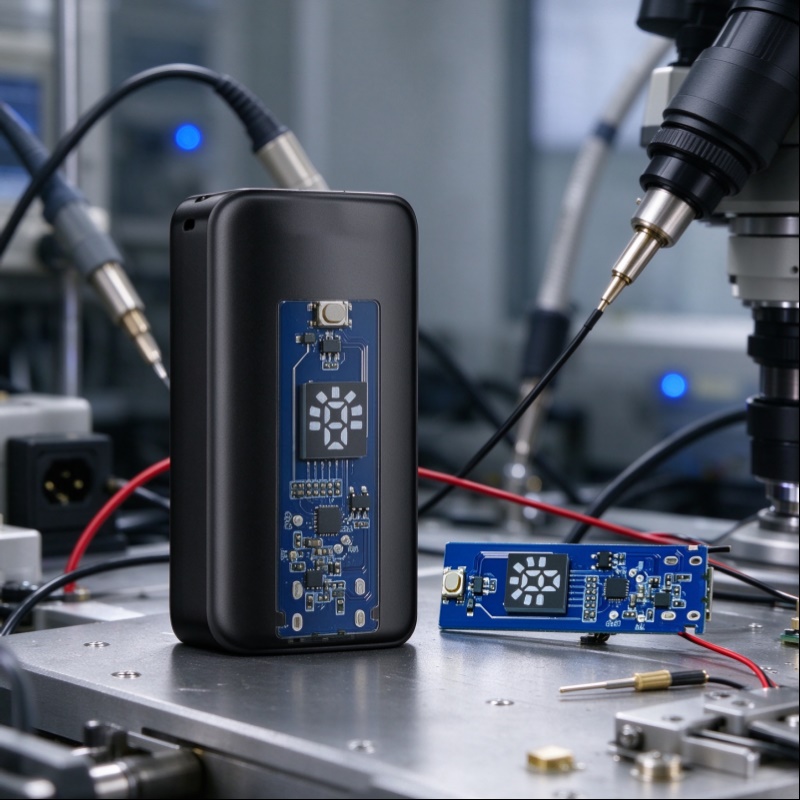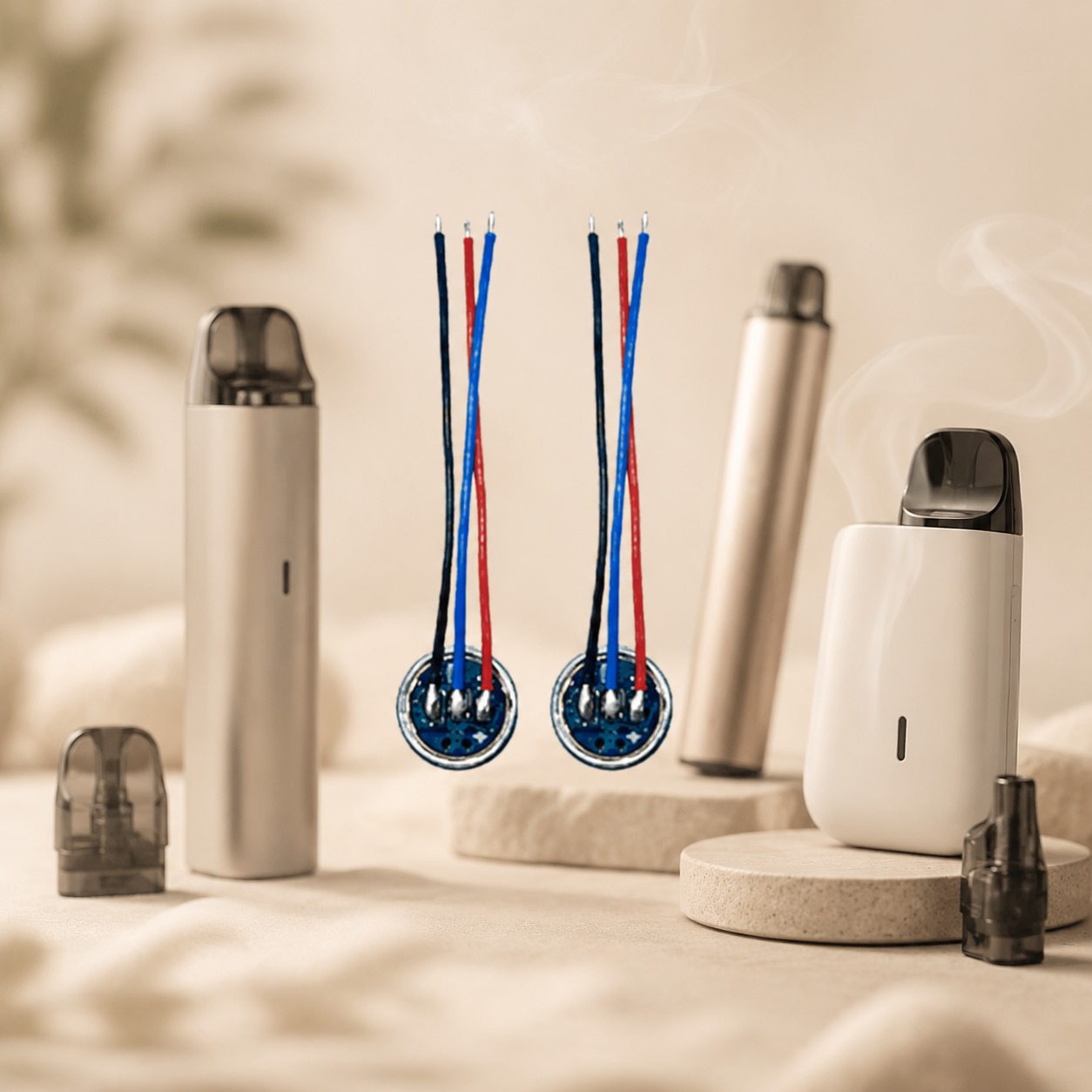

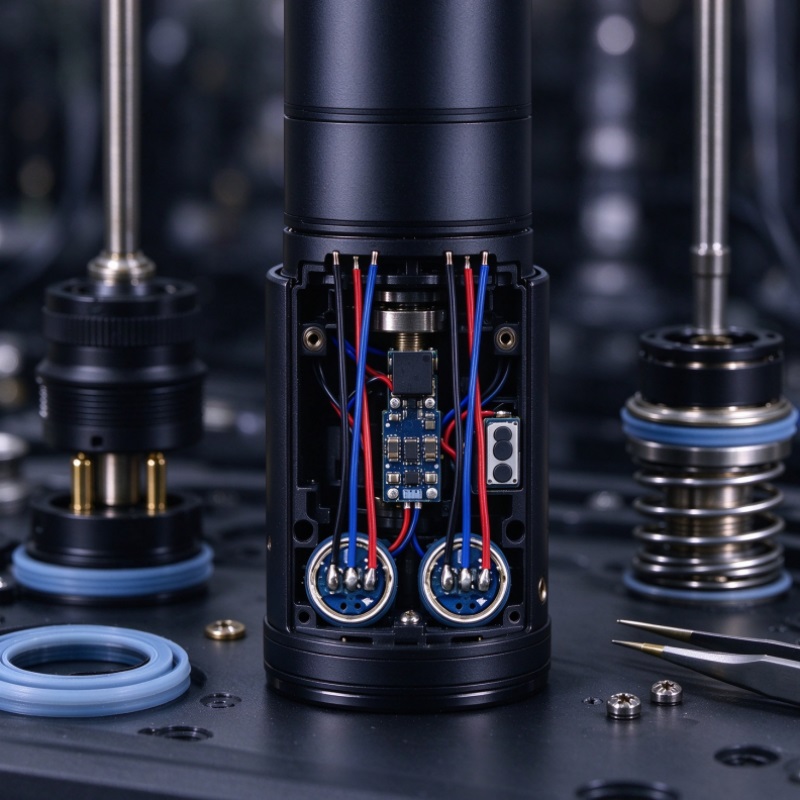
Airflow detection plays an important role in the operation of modern electronic vapor devices. The sensor must respond accurately to changes in air pressure while maintaining stable performance in a compact internal assembly. However, exposure to oil residue and other contaminants can affect sensitive components and interfere with signal detection. A custom vape airflow sensor module with an oil-proof film helps address this challenge by adding a protective barrier while preserving the sensor’s ability to detect pressure changes.
RIMYI develops MEMS-based airflow sensing components for compact electronic devices, with attention to detection accuracy, low power consumption, and circuit integration. Its RM-GDL60N12-Lxx series uses a white oil-proof film and a dual-hole structure to support stable airflow detection in different device configurations.
Why Does an Oil-Proof Film Matter in Airflow Detection?
An airflow sensor detects pressure differences caused by changes in air movement. Inside a compact device, however, oil residue may gradually reach the sensing area and affect the component’s response. Without suitable protection, accumulated residue can interfere with pressure transmission, reduce detection consistency, or affect long-term operation.
An oil-proof film helps reduce direct contact between oil contaminants and the sensitive sensing structure. In an airflow sensor vape application, this protective layer supports more stable pressure detection while allowing the sensor to respond to normal airflow changes. Therefore, film material and assembly quality are important considerations when selecting an airflow sensor vape component.
The film also needs to work with the sensor’s mechanical structure rather than simply cover the sensing area. If the protective layer restricts pressure transmission, detection sensitivity may change. For this reason, manufacturers should evaluate the film structure, pressure range, and sensor response together during product development.
How Does the Dual-Hole Structure Improve Detection?
The RM-GDL60N12-Lxx uses a dual-hole design, with one air hole on the substrate and another on the outer shell. The shell opening receives negative pressure directly, allowing the pressure difference to reach the MEMS sensing unit through the designed structure. When the pressure exceeds the preset threshold, the GATE output changes from high to low.
In this design, the custom vape airflow sensor module combines pressure detection with a defined output response. If the pressure remains low for 12 seconds, the sensor activates its long-inhalation protection function and keeps the GATE output low. This mechanism helps the electronic control circuit respond to sustained pressure conditions without requiring a complicated peripheral circuit.
The dual-hole structure also gives engineers more flexibility when planning the internal airflow path. During development, they can evaluate the opening positions, housing layout, and pressure transmission requirements together. This is particularly useful when integrating an e-cigarette sensor PCBA module into a slim enclosure with limited internal space.
Technical Specifications and Protection Functions
The following table summarizes the available specifications for the RM-GDL60N12-Lxx model with a white oil-proof film. Values marked as unavailable are not specified in the supplied technical information and should be confirmed against the final product datasheet.
| Parameter | Specification |
|---|---|
| Model | RM-GDL60N12-Lxx |
| Pressure range | 100–300 Pa |
| Film type | White oil-proof film |
| Diameter | 6 ± 0.1 mm |
| Height | 2.5 ± 0.2 mm |
| Working voltage | 2.8 V minimum / 3.7 V typical / 5.5 V maximum |
| Static current | 1 μA minimum / 3 μA maximum |
| Switching tube conduction impedance | 80 mΩ typical |
| Overheating protection threshold | -20°C to 85°C |
| Inhalation timeout | 10 s minimum / 12 s typical / 14 s maximum |
| Low power consumption | Less than 3 μA |
| Short-circuit protection | Supported |
| Overheating protection | Supported |
| Anti-interference capability | Strong anti-interference design |
Beyond its sensing structure, the component integrates several protection functions that support stable device operation:
- Low power consumption: Current consumption below 3 μA helps reduce the sensor’s power requirements.
- Short-circuit protection (SCP): The protection function helps limit the impact of short-circuit conditions on the sensor circuit.
- Long-inhalation protection: A typical 12-second threshold activates the defined protection response when pressure remains low for an extended period.
- Overheating protection (OTP): The sensor includes an overheating protection function with a specified threshold range of -20°C to 85°C.
- Anti-interference capability: The design supports consistent signal detection in electronic assemblies where other circuit components may generate interference.
Integration With an E-Cigarette Control Board
Sensor performance depends not only on the sensing component but also on how the surrounding circuit processes its output. A sensor-based e-cigarette control board must match the sensor’s working voltage, output characteristics, and protection logic. Engineers should also consider PCB layout, grounding, signal routing, and the physical position of the sensor’s air openings.
For a compact sensor vape design, a simple peripheral application circuit can help reduce integration complexity and support a cost-effective assembly. However, engineers still need to verify the output response and protection behavior within the complete device. Testing should cover normal pressure changes, sustained low-pressure conditions, power variation, and interference from nearby electronic components.
The following points are useful during integration:
- Confirm electrical compatibility: Match the sensor’s working voltage and output requirements with the control board.
- Plan the airflow path: Keep the substrate and shell openings aligned with the intended internal airflow structure.
- Evaluate film performance: Check whether the oil-proof film maintains suitable pressure transmission under actual operating conditions.
- Verify protection logic: Confirm the short-circuit, overheating, and 12-second inhalation protection responses.
- Test the assembled device: Evaluate the sensor and control board together rather than relying only on individual component tests.
OEM Customization for Different Device Designs
Different electronic device projects may require different pressure thresholds, dimensions, connector arrangements, or PCB integration methods. Therefore, OEM development should begin with the target device’s mechanical and electrical requirements. RIMYI can support project discussions around sensor structure, oil-proof film selection, pressure range, and peripheral circuit design.
For an e-cigarette sensor PCBA module, customization may involve coordinating the MEMS sensor with the control board and its surrounding components. Engineers can review the available installation space, expected pressure response, power requirements, and protection logic before confirming the design. This approach helps ensure that the sensing component fits the complete product architecture.
A practical OEM evaluation should include the following information:
- Required sensor dimensions and installation space.
- Target pressure range and output response.
- Working voltage and power consumption requirements.
- Oil-proof film and housing structure requirements.
- Control board interface and protection functions.
- Prototype testing and mass-production requirements.
These details help determine whether the existing RM-GDL60N12-Lxx configuration meets the application or whether further design adjustments are necessary.
Conclusion
Oil contamination protection, accurate pressure detection, and compact integration all influence the reliability of airflow sensing components. The RM-GDL60N12-Lxx combines a white oil-proof film, dual-hole MEMS structure, low power consumption, and multiple protection functions in a compact 6 mm diameter design. Its simple peripheral circuit also supports practical integration into electronic control assemblies.
For projects requiring specific dimensions, pressure thresholds, or circuit arrangements, a custom vape airflow sensor module can be evaluated according to the complete device requirements. With OEM customization and technical integration support from RIMYI, product developers can select a suitable sensing structure and optimize its compatibility with the final electronic design.