

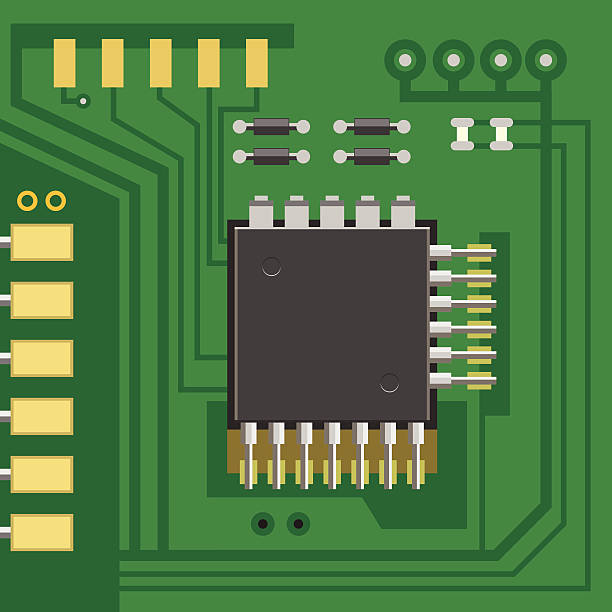
In the rapidly evolving vapor industry, product safety is no longer just a regulatory compliance metric—it is the baseline for brand survival. While modern lithium-ion batteries pack incredible energy density into compact form factors, they inherently carry thermal runaway risks if mismanaged.
Historically, many e-cigarette thermal incidents stemmed from a critical engineering vulnerability: over-reliance on software-based safety loops. When a device’s main microcontroller unit (MCU) crashes, freezes, or encounters a firmware loop, all software-reliant protections instantly vanish. To eliminate this single point of failure, next-generation engineering demands a paradigm shift. This technical guide explores how a multi-protection e-cigarette PCB design integrates physical hardware latches and independent secondary circuits to create a fail-safe environment that protects consumers and brands alike.
1. The Vulnerability of Software-Only Protection Architecture
Traditional low-cost e-cigarette control boards rely heavily on the central MCU to monitor the device’s vital signs. The MCU reads voltage levels, measures temperature via an analog-to-digital converter (ADC), tracks puff duration, and commands the power MOSFET to open or close.
[Normal State]: MCU Reads Sensors ──> Executes Safety Code ──> Controls Power MOSFET
[Crash State]: MCU Freezes / Loops ──> Code Halts ──> MOSFET Stuck Open ──> Thermal Runaway
However, under extreme conditions—such as electrostatic discharge (ESD), moisture ingress from leaking e-liquid, or localized voltage spikes—the MCU’s program counter can “fly off track,” entering an infinite dead loop. If the MCU freezes while the heating element is active, it cannot execute the shutdown command, even if the battery temperature surges past safe limits. Therefore, relying solely on software code to handle critical thermal and electrical events creates an unacceptable safety liability.
2. The Hardware Latch Breakthrough: Physical Separation of Powers
To achieve true PCB safety redundancy, professional hardware architecture decouples critical protection vectors from the MCU’s software state. RIMYI’s advanced PCBA design implements dedicated analog hardware logic and latching mechanisms that operate completely independently of the central processor.
Hardware-Level Latch Logic
Our boards feature discrete analog comparators that continuously monitor circuit current, cell voltage, and system temperature. Because these components are purely hardware-driven, they require no code execution. The moment an electrical characteristic crosses a dangerous threshold, the comparator sends an instantaneous hardware signal that directly cuts off the gate drive of the power MOSFET. Even if the MCU is fully locked up or physically damaged, the hardware latch forces a total system shutdown.
Independent Puff-Timeout Control Unit
A common failure mode is an auto-firing vape caused by a stuck airflow sensor or a software freeze. Our solution utilizes an isolated physical timing circuit. The moment current begins flowing to the heating coil, an independent hardware timer starts counting. If the continuous draw exceeds a strict factory threshold (e.g., 10 seconds), the timer physically disconnects the output circuit. This effectively eliminates the risk of continuous heating caused by shorted heating elements or frozen code.
NTC Thermistor Coupled with Hardware Comparators
Instead of routing Negative Temperature Coefficient (NTC) thermistor data exclusively through the MCU’s software stack, our architecture hooks the thermistor directly to a dedicated hardware comparator network.
-
The 85°C Safeguard: Positioned adjacent to the battery cell and the atomization chamber, this sensor triggers an immediate hardware-level cutoff if internal temperatures hit 85°C, suppressing thermal expansion at the source.
Low-Voltage Latch / Under-Voltage Lockout (UVLO)
Deeply discharging a lithium battery below its safe chemical threshold damages its internal structure, leading to copper dendrite formation during subsequent recharge cycles—a leading cause of internal short circuits and subsequent battery explosions. Our hardware UVLO circuit enforces a strict physical lock whenever the cell drops below 3.0V. Once tripped, the hardware latch prevents any further current draw until a verified charging voltage is applied, keeping the battery chemistry perfectly stable.
3. The Five-Fold Hardware Safety Redundancy Matrix
By combining independent hardware circuits with optimized MCU software, our PCBA platform achieves a robust, dual-redundant safety profile across five core threat vectors:
| Threat Vector | Primary Software Layer (MCU) | Secondary Hardware Layer (Discrete Logic) | Hardware Action Effect |
| Short Circuit | Software current sensing check | Instantaneous analog comparator trip | Immediate physical circuit break |
| Over-Charging | Charging IC software monitoring | Independent over-voltage cutoff chip | Blocks incoming charge line |
| Over-Discharging | Software voltage read & sleep mode | Hardware Under-Voltage Lockout (UVLO) | Forced 3.0V absolute disconnect |
| Over-Heating | MCU temperature algorithm polling | Direct NTC + Hardware Comparator loop | Instant shutdown at 85°C |
| Vaping Timeout | Software clock counter (Interrupt) | Isolated physical timing hardware | Hard cutoff at 10 seconds |
Conclusion: Zero Compromise on Consumer Safety
In the modern vape market, hardware reliability serves as the ultimate differentiator for premium brands.
Therefore, you must stop risking your market reputation and consumer safety on unverified control boards. Software-dependent circuits often fail during a routine system freeze. Instead, you should upgrade to a comprehensive multi-protection e-cigarette PCB design. Our advanced layouts feature robust hardware latches and complete electrical redundancy. Consequently, you build an unshakeable foundation of safety into every device you ship.
Partner with RIMYI today to secure high-precision, customized PCBA solutions. We engineer our hardware to protect your customers and future-proof your brand completely.