

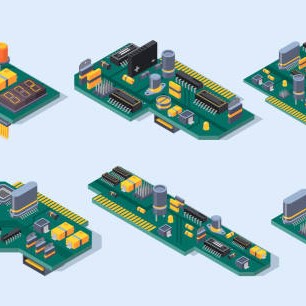
The rapid evolution of the vaping industry demands hardware that can scale alongside market trends. As consumer preferences shift toward high-capacity smart disposables and advanced pod systems, manufacturers face intense pressure to accelerate throughput while maintaining flawless reliability.
When designing the electronic foundation of a vape device, engineers arrive at a critical fork in the road: choose a traditional Discrete Component Scheme (sourcing and surface-mounting hundreds of individual resistors, capacitors, and microchips directly onto the main board) or transition to an SMT-Ready Modular PCBA Approach (utilizing a pre-assembled, fully integrated control module that surface-mounts onto the main chassis as a single component).
This guide provides an engineering-level breakdown of why choosing a modular e-cigarette PCBA platform is the ultimate catalyst for scaling production, lowering assembly defect rates, and streamlining your global supply chain.
1. TCO Analysis: The True Cost of Assembly
At first glance, a discrete component bill of materials (BOM) can look highly attractive. Purchasing raw microchips, field-effect transistors (FETs), and passive resistors in bulk appears cheaper on paper than buying an integrated module. However, this superficial evaluation completely ignores Total Cost of Ownership (TCO) across the entire manufacturing lifecycle.
Pick-and-Place Machine Bottlenecks
Every discrete component on a PCB requires a unique placement cycle by automated SMT machinery. A standard vape motherboard utilizing discrete electronics can require 30 to 50 individual placements.
-
The SMT Drag: High component counts slow down the linear speed of your SMT line, creating a severe manufacturing bottleneck.
-
The Modular Acceleration: By converting those 50 discrete footprints into a single, surface-mount-ready sub-module, the pick-and-place machine executes just one single placement cycle. This dramatically cuts machine time per board, exponentially boosting daily factory throughput.
Testing and Yield Realities
With discrete assembly, multi-point functional testing can only happen after the entire mainboard is fully populated and reflowed. If a single micro-resistor suffers a cold-solder joint or an internal defect, the entire assembled board must be routed to manual rework stations, driving up labor overhead and scrap rates.
2. Quality Engineering: The Pre-Test & Pre-Age Advantage
Quality assurance in mass-market vaping electronics hinges on preventing early-life failures (infant mortality of semiconductors). This is where a modular e-cigarette PCBA structure delivers an unassailable engineering advantage through isolated quality controls.
[Discrete Scheme]  ──> Component SMT ──> Mass Reflow ──> System Test ──> Defect Found (High Rework Cost)

[Modular Scheme]   ──> Module Factory QA (Pre-Tested/Pre-Aged) ──> Main Board SMT ──> 100% Final Yield
-
Module-Level Verification: Because the control core is isolated onto its own modular substrate, specialized suppliers like RIMYI perform 100% automated optical inspections (AOI), functional circuit checks, and electrical stress-testing before the module ever arrives at your final assembly facility.
-
Controlled Environmental Stress Screening (ESS): Sub-modules undergo dedicated pre-aging protocols. Any volatile silicon or sub-standard solder matrix is weeded out at the module factory level.
-
Minimized Secondary Reflow Damage: The main assembly line only applies a single thermal pass to bond the rugged module to the battery/airflow breakout board. This shields delicate microcontroller units (MCUs) from the cumulative thermal shock often seen in complex multi-stage discrete board designs.
Consequently, your final assembly yield climbs closer to a perfect 100%, significantly mitigating post-market product failures and regulatory returns.
3. Supply Chain Resilience: Slicing Through BOM Complexity
Scaling a vape brand from ten thousand units to ten million units exposes big hidden risks within component procurement. Managing a discrete supply chain requires delicate orchestration across multiple chip vendors and component brokers.
-
BOM Compression: Moving to a modular architecture collapses dozens of line items on your BOM sheet into a single, cohesive stock-keeping unit (SKU). Instead of managing 15 separate micro-component vendors, your purchasing team interfaces with one trusted partner.
-
Reduced Inventory Overhead: Eliminating the need to store, track, and audit hundreds of thousands of loose reels of tape-and-reel passives frees up massive amounts of warehouse space and working capital.
-
Seamless Field Upgrades: If market trends dictate a shift from a basic LED battery indicator to an advanced TFT screen layout, a modular framework allows you to easily drop a new, pin-compatible smart module onto your existing chassis architecture without re-engineering the entire base shell.
Conclusion: Standardize the Core, Customize the Experience
In high-volume consumer electronics, optimization dictates that you do not reinvent the wheel with every new product release.
Stop allowing fragmented component supply chains, extended SMT cycle times, and post-reflow defect rates to stall your brand’s growth. By building your hardware pipeline around an SMT-ready modular e-cigarette PCBA core, you standardize your critical safety and firmware logic while freeing your team to focus on external aesthetics, liquid optimization, and aggressive market capture.
Explore RIMYI’s advanced portfolio of high-efficiency pre-tested vape modules today to secure the engineering foundation your scale demands.