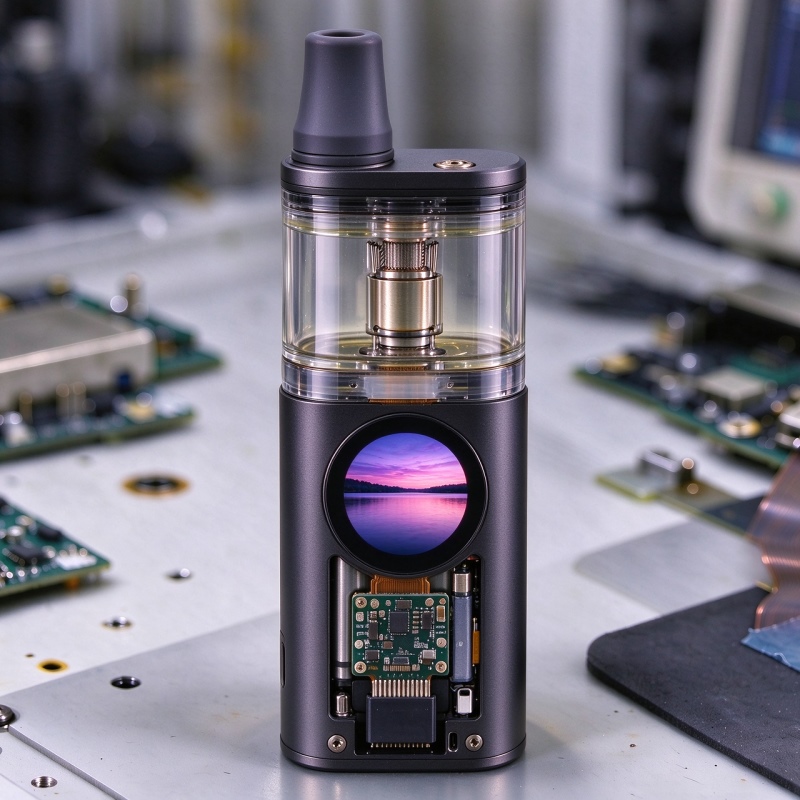

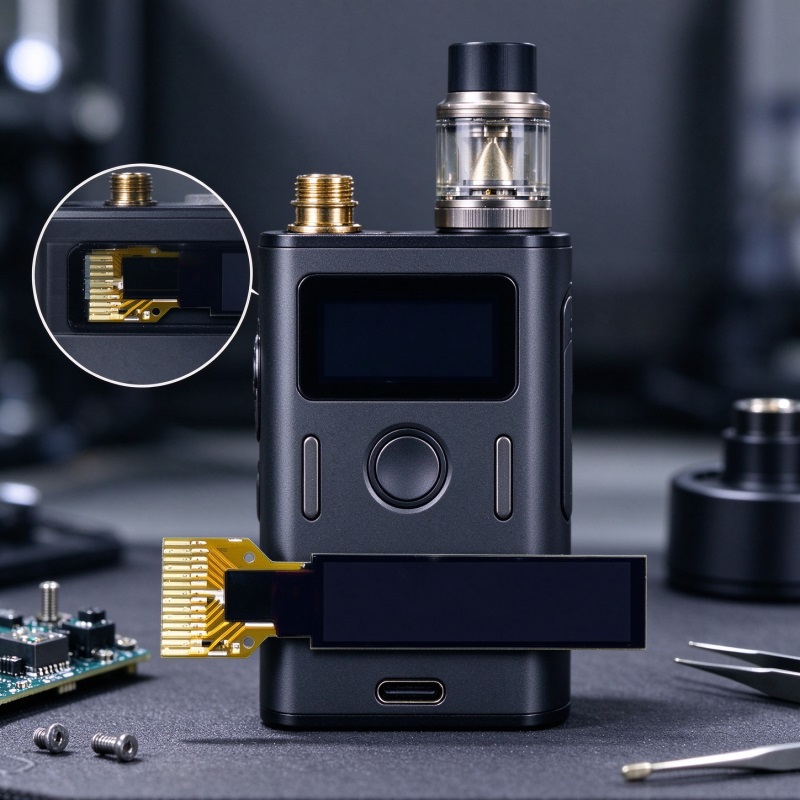
Compact electronic devices often have limited space for user interfaces, so the display must communicate essential information without making the overall product bulky. A high-resolution micro OLED vape display panel combines a small footprint with clear text, vivid colors, and responsive visual output. These qualities help designers present operating information in a readable format while maintaining a streamlined device profile. For product developers, the challenge is to balance display size, resolution, power consumption, and integration requirements from the beginning of the design process.
RIMYI’s HP9616-15 is a 0.69-inch OLED display panel intended for compact e-cigarette designs. The panel uses an SSD1312 driver IC and a white display. Its slim structure fits space-constrained enclosures. In addition, it suits projects requiring a distinctive vape display and a well-organized user interface.
Why Micro OLED Technology Suits Compact Devices
Micro OLED technology makes it possible to present clear visual information in a small display area. Since the panel does not need a large backlight assembly, designers can develop slim product layouts and allocate more internal space to other components. Moreover, OLED pixels produce their own light, which supports strong contrast and clear visual presentation across different interface elements.
For a vape with customizable screen, the display area can show selected icons, status indicators, and other interface graphics according to the product’s software and layout requirements. However, the actual interface depends on the controller, firmware, and supported resolution. Therefore, developers should define the information hierarchy and graphic layout before finalizing the display configuration.
Key Specifications of the HP9616-15 OLED Panel
The HP9616-15 combines a compact outline with a narrow visible area. Its external dimensions measure 24 mm × 6.9 mm, while the visible area measures 18.26 mm × 4.18 mm. The module thickness is 1.25 mm, making the panel suitable for designs where installation depth is limited.
| Parameter | Specification |
|---|---|
| Model | HP9616-15 |
| Display type | OLED |
| Display size | 0.69 inch |
| Resolution listed in product overview | 96 × 16 |
| Resolution mentioned in product description | 128 × 32 |
| External dimensions | 24 mm × 6.9 mm |
| Visible area | 18.26 mm × 4.18 mm |
| Display color | White |
| Driver IC | SSD1312 |
| Module thickness | 1.25 mm |
| Color capability stated in product description | 262K colors |
The supplied product information contains two different resolution values: 96 × 16 in the specification table and 128 × 32 in the descriptive copy. The 262K-color statement also appears in the descriptive copy, while the overview table identifies the display color as white. These details should be confirmed against the final datasheet and interface configuration before a production design is approved.
Visual Clarity and User Interface Design
A small display needs an interface that makes effective use of every pixel. Designers can prioritize key indicators, use concise labels, and maintain sufficient spacing between visual elements. As a result, users can identify important information without navigating a crowded screen. The high-resolution micro OLED vape display panel can support a compact visual interface when the selected resolution matches the intended graphics and firmware.
Vaporizer screens may present different combinations of icons, status information, and operating prompts. Nevertheless, designers should avoid placing too many elements in a narrow display area. A clear hierarchy, consistent icon style, and readable character design generally create a better visual experience than simply increasing the amount of displayed information.
Integration With Electronic Control Boards
Display performance depends on more than the panel itself. The driver IC, control board, firmware, power supply, and connection layout must work together to produce the intended interface. For example, an e-cigarette digital LED display or an e-cigarette battery display board may require specific communication and layout coordination, depending on the product architecture. Engineers should verify the electrical interface and display initialization requirements during the prototype stage.
The following points can help guide integration:
- Confirm the required resolution and display orientation before designing interface graphics.
- Check the SSD1312 driver compatibility with the control system and firmware.
- Review the available installation space, visible area, and module thickness.
- Evaluate power requirements and display behavior under the intended operating conditions.
- Test text, icons, and status indicators on the actual assembled device.
OEM Customization for Different Product Designs
Different product concepts may call for different screen layouts, display dimensions, or control-board arrangements. RIMYI can discuss OEM customization requirements with customers, including the intended interface, mechanical space, driver compatibility, and project-specific display configuration. This early coordination helps reduce design changes during later development stages.
A high-resolution micro OLED vape display panel should be selected according to the complete device requirements rather than screen size alone. Developers should provide the target resolution, display content, preferred dimensions, connection details, and expected production quantity when requesting a project evaluation. Based on these details, the display and control-board arrangement can be reviewed for compatibility.
Conclusion
A compact OLED panel can give a small electronic device a clear and visually organized interface without requiring a large display area. The HP9616-15 offers a 0.69-inch format, SSD1312 driver IC, white display, 24 mm × 6.9 mm external dimensions, and a 1.25 mm module thickness. Its final resolution and color configuration should be verified because the supplied product overview and descriptive copy list different values.
For projects requiring a slim screen and tailored interface, evaluate the high-resolution micro OLED vape display panel with the control board, firmware, and enclosure. With early technical coordination and OEM customization, RIMYI helps developers find a suitable display configuration. This ensures compatibility with their device layout and visual requirements.