
In the fast-evolving electronic cigarette industry, vaporization efficiency has become one of the most defining factors influencing user satisfaction and product performance. The efficiency of vapor production not only affects flavor intensity but also determines power consumption, heating consistency, and battery longevity. At the core of this optimization lies the PCB layout design, a critical component that governs current flow, heat distribution, and overall circuit performance.
The Connection Between PCB Design and Vaporization Efficiency
Every e-cigarette device depends on a circuit board to manage the interaction between power, heating elements, and sensors. The PCB layout directly affects how electrical signals travel across the device. When circuits are poorly designed or paths are overly complex, current loss and uneven heating can occur, which reduces vapor density and consistency.
In contrast, a well-structured vape PCB layout ensures that electrical energy flows smoothly to the heating coil. This precise energy delivery allows for faster and more uniform vaporization of the e-liquid, leading to improved flavor retention and user experience. Furthermore, optimized copper trace widths and layer spacing in the PCB help manage temperature buildup, preventing excessive heat that can degrade the atomizer or cause inconsistent vapor output.
Thermal Management: The Heart of Efficient Vaporization
Vaporization relies heavily on controlled heating, making thermal management one of the key considerations in PCB design. The placement of thermal vias, heat sinks, and conductive pathways determines how efficiently heat is distributed and dissipated. If the PCB fails to manage heat effectively, hot spots may form, leading to premature coil burnout and reduced energy efficiency.
Integrates advanced low-resistance copper layers and multi-zone heat control systems into its customized PCBA solutions. These designs enable even heat distribution, stabilizing atomization temperature within an optimal range. As a result, vapor output remains consistent even during extended use, while energy waste and overheating are minimized. By combining smart layout engineering with advanced simulation testing, RIMYI ensures every board achieves the ideal balance between power delivery and temperature control.
Power Distribution and Signal Integrity
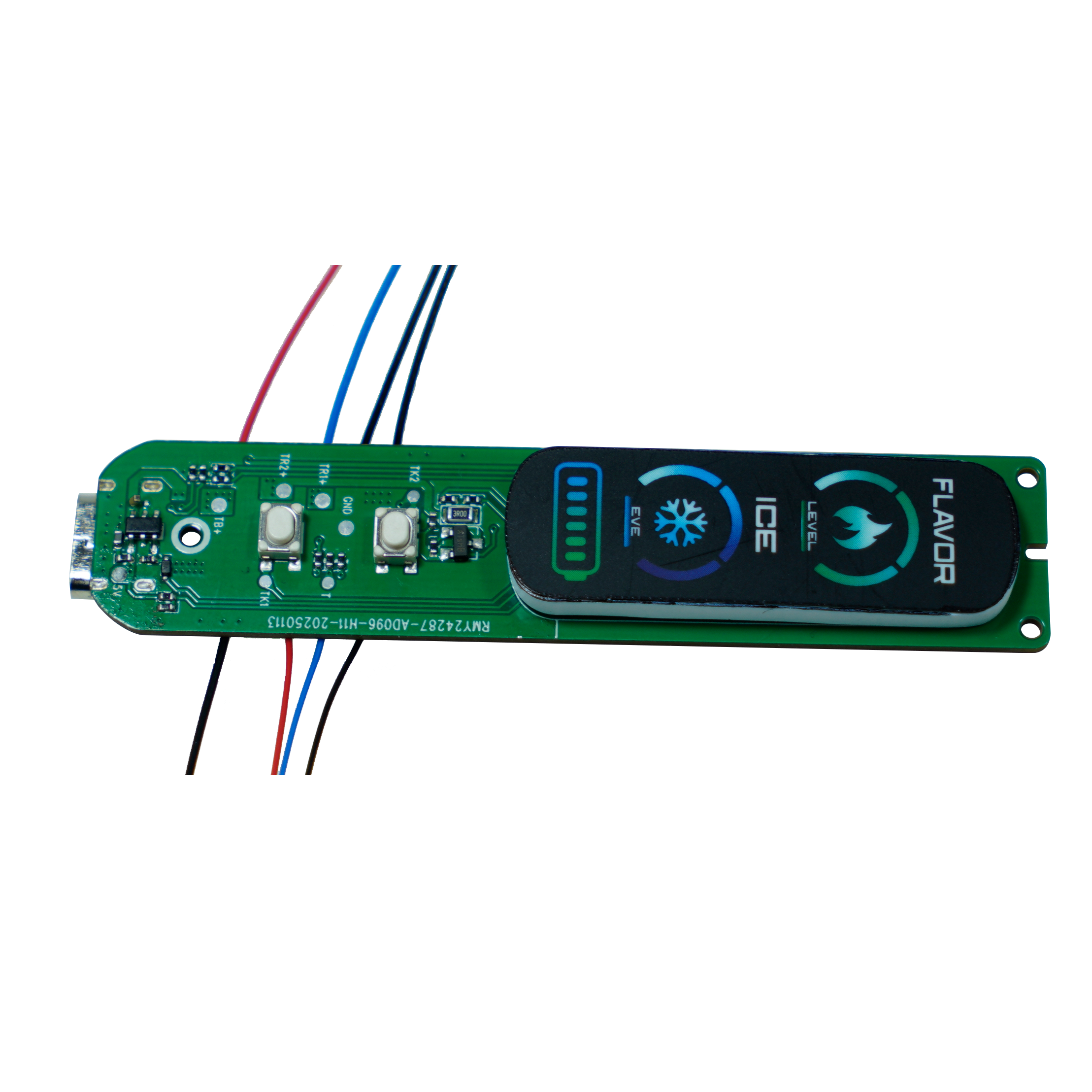
Power regulation is another major element influencing vaporization performance. In modern vape systems, microcontrollers and sensors constantly adjust voltage and current to maintain precise heating levels. The PCB layout plays a decisive role in maintaining clean power distribution and signal integrity. Any design flaw—such as poor grounding or crosstalk between traces—can lead to voltage fluctuations that affect the vaporization process.
RIMYI’s rechargeable e-cigarette PCBA customization solutions are developed with precise circuit modeling and optimized component placement. This ensures each control signal reaches the heating element without interference. The outcome is a smoother power transition curve, reduced electrical noise, and improved overall energy efficiency—essential for consistent vapor production and extended battery performance.
Component Placement and Compact Design Efficiency
Modern vape devices demand compact and portable designs. Therefore, component placement on the PCB must be carefully planned to maximize internal space while maintaining electrical performance. Placing the battery management system, temperature sensors, and microcontroller in strategic positions allows efficient current flow and shortens response time.
Use 3D design and electromagnetic simulation tools to map optimal component locations within each customized e-cigarette PCBA. This not only minimizes electromagnetic interference but also improves heat dissipation. The result is a high-performance, compact vaporization system capable of sustaining precise temperature control with minimal energy loss. Such innovation supports both design flexibility and product miniaturization, enabling brands to meet evolving consumer preferences for lightweight, sleek vape devices.
Reliability and Durability in Long-Term Use
A reliable PCB layout design ensures long-lasting performance under continuous heating cycles. Each e-cigarette board must withstand high temperatures, moisture exposure, and frequent charging without performance degradation. Through advanced conformal coating, gold plating, and high-Tg substrate selection, PCB durability against oxidation and mechanical stress.
These materials and layout decisions help maintain stable electrical connections and prevent delamination over time. Additionally, reliability testing under varying environmental conditions ensures that customized PCBA boards deliver consistent vaporization efficiency across different climates and usage intensities. This durability translates to a better consumer experience and reduced product returns for vape brands.
Smart Integration for Intelligent Vapor Control
As vaping technology evolves, PCB layouts are becoming increasingly complex, incorporating sensors, microcontrollers, and AI-driven chips. These components enable intelligent vapor control, automatically adjusting heating power based on puff duration, coil resistance, and ambient conditions. The success of such smart features depends on how well the PCB architecture integrates electronic modules while preserving signal clarity and minimizing latency.
RIMYI’s approach to rechargeable e-cigarette PCBA customization includes firmware-compatible design, allowing vape brands to integrate cloud connectivity, temperature tracking, and personalized vapor profiles. The integration of smart components within optimized PCB layouts not only enhances user safety but also aligns with the market trend toward data-driven vaping experiences.
Sustainability and Energy Efficiency
The environmental aspect of PCB layout design is becoming increasingly relevant. With consumers demanding eco-friendly and energy-efficient vaping products, focus on low-power PCB architectures that extend battery life and reduce electronic waste. Through optimized circuit routing and improved current distribution, energy loss during vaporization is minimized.
Moreover, the company uses lead-free soldering processes and recyclable board materials, contributing to sustainable manufacturing practices. By aligning performance with sustainability, RIMYI helps vape brands meet global environmental standards while maintaining high vaporization efficiency.
Conclusion: Layout Precision Defines Vaporization Quality
In today’s competitive vape market, vaporization efficiency defines not only the user experience but also brand reputation and product reliability. A meticulously engineered PCB layout serves as the foundation for achieving optimal heating performance, consistent vapor density, and extended device lifespan.
RIMYI leverages its expertise in rechargeable e-cigarette PCBA customization to advance vaporization technology. It delivers tailored solutions that combine precision engineering, smart functionality, and efficient power control. Moreover, by merging advanced layout design with a deep understanding of vapor dynamics, RIMYI helps vape brands create innovative and eco-friendly products.
As the industry moves toward smarter, more sustainable vaping systems, PCB design will remain the silent force shaping the efficiency, stability, and future of vaporization innovation.