

As vape devices continue to become more intelligent and compact, airflow detection accuracy has become an important factor affecting user experience. A reliable sensor needs to identify genuine inhalation actions while avoiding unnecessary activation caused by environmental changes, liquid exposure, or electrical noise. Therefore, improving sensor stability is essential for modern vape product development. False triggers usually occur when airflow sensors incorrectly detect changes that do not come from actual user inhalation. These unwanted activations may reduce battery efficiency, affect device reliability, and create inconsistent performance. As a result, manufacturers need accurate sensing solutions with stable signal processing and strong environmental resistance.
The capacitive vape airflow sensors developed for advanced vape applications use capacitance-based detection technology to improve sensitivity while reducing unnecessary responses. Through optimized circuit design and precise threshold control, these sensors help devices achieve smoother activation and better airflow management.
Optimize Capacitance Detection To Improve Accuracy
One effective method to reduce false triggers is improving the accuracy of capacitance measurement. Since airflow changes create variations in capacitance values, the sensor needs to distinguish between real airflow movement and external interference. Furthermore, a well-designed detection system should include intelligent threshold adjustment. By analyzing capacitance changes within a specific range, the sensor can identify user inhalation patterns more accurately and avoid responding to minor environmental fluctuations.
Key design approaches include:
- Precise Capacitance Measurement: Detects airflow changes with higher sensitivity and accuracy.
- Multi-Level Threshold Control: Separates real inhalation signals from background interference.
- Dynamic Signal Adjustment: Allows output changes based on different airflow levels.
- Stable Circuit Processing: Reduces electrical noise and improves response consistency.
- Optimized Detection Range: Supports customized activation settings for different vape designs.
Consequently, manufacturers can achieve more reliable auto-draw performance and reduce unwanted device activation.
Advanced Circuit Design Supports Stable Signal Output
Besides sensor sensitivity, circuit architecture also plays an important role in preventing false triggers. The airflow sensor parts integrate a capacitance measurement unit, threshold logic system, and PFM output structure to provide accurate signal conversion. The capacitive vape airflow sensors use multi-level output control to adjust signals according to airflow intensity. Additionally, the PFM output system provides 64-step resolution, allowing smoother control between low and high airflow conditions.
This design provides several advantages:
- Improved signal accuracy during different usage conditions
- Faster response to airflow changes
- Reduced interference from unstable inputs
- Better compatibility with compact vape assemblies
Moreover, the optimized circuit structure allows manufacturers to create different airflow experiences according to product positioning and user preferences.
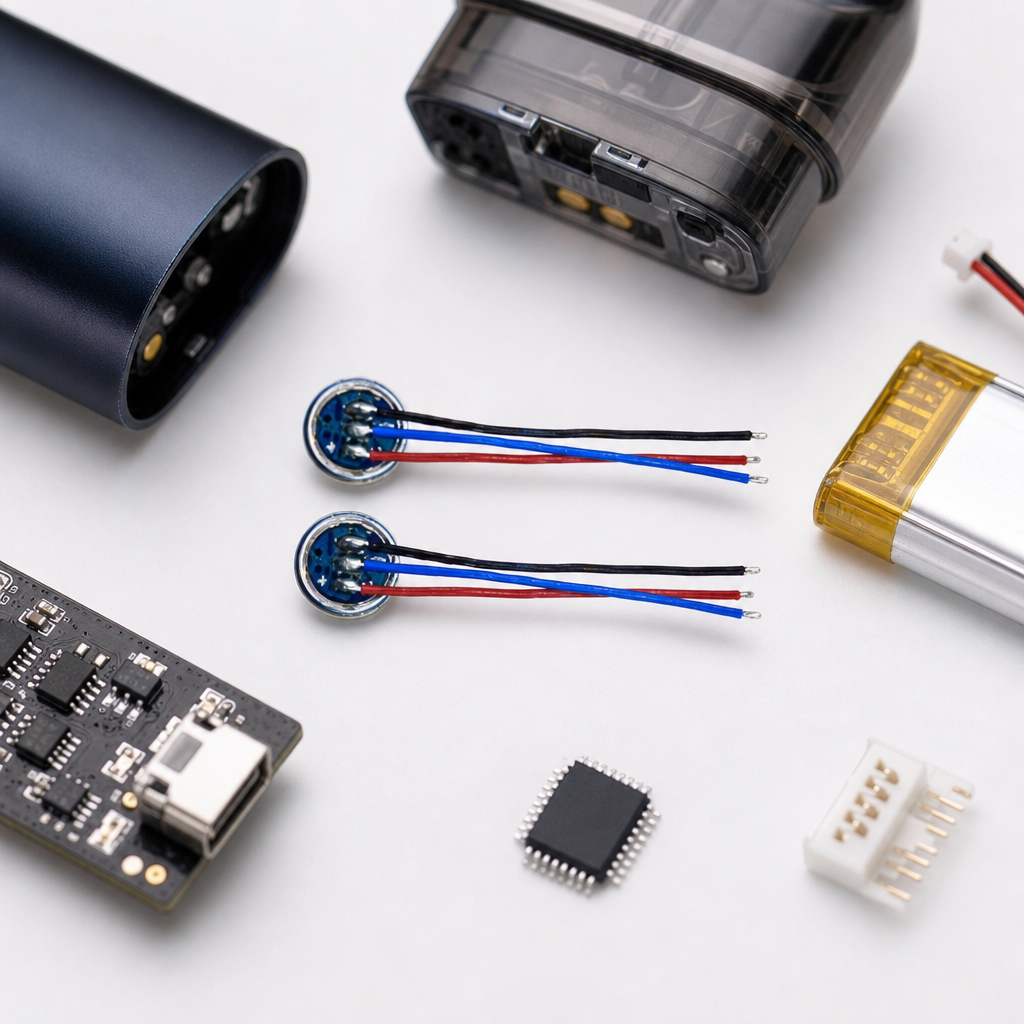
Preventing False Triggers In Oil-Rich Environments
Vape devices often operate in environments where internal components may come into contact with oil vapor or residue. Therefore, sensor protection is another important factor in maintaining long-term performance. The airflow control sensor parts feature an anti-oil film design that helps protect internal sensing elements. As a result, the sensor can maintain stable operation even under continuous usage conditions.
The protective design helps provide:
- Resistance against oil contamination
- Reduced signal noise caused by residue buildup
- Extended sensor service life
- Improved device consistency
Additionally, customized detection parameters allow engineers to adjust initial values, thresholds, and sensing ranges according to different vape structures.
Comparison Of Different Methods For Reducing False Triggers
Different design strategies can influence airflow sensor performance. The following table compares common approaches and their effects.
| Design Method | Effect On Sensor Performance |
|---|---|
| Basic Airflow Detection | May respond to environmental interference |
| Fixed Threshold Control | Limited adaptability for different usage conditions |
| Capacitance-Based Detection | Provides accurate airflow variation recognition |
| Multi-Level Signal Processing | Improves activation stability and response accuracy |
| Anti-Oil Protection Design | Reduces contamination-related signal issues |
As shown above, combining precise sensing technology with protective design can significantly improve overall reliability.
Custom Sensor Solutions For Different Vape Applications
Different vape products require different airflow experiences. Therefore, flexible customization is important for manufacturers developing new devices. Whether used in compact pods or larger vape systems, airflow sensors need to match specific structural and performance requirements. RIMYI provides customized airflow control sensor parts designed for various OEM applications. Engineers can adjust detection parameters, output characteristics, and sensing ranges to achieve different activation experiences.
Furthermore, these sensors support:
- Compact pod systems
- Auto-draw vape devices
- High-capacity vape mods
- Customized electronic vaporizer designs
- Intelligent airflow control systems
Through flexible configuration, manufacturers can improve product differentiation while maintaining stable operation.
Improving Vape Reliability With RIMYI Sensor Technology
For modern vape devices, sensor reliability directly affects user satisfaction and product quality. Therefore, reducing false triggers requires a combination of accurate detection, intelligent signal processing, and durable protection. The capacitive vape airflow sensors from RIMYI combine advanced capacitance measurement technology, multi-level output control, and anti-oil protection to deliver stable airflow detection performance. Moreover, the optimized design helps manufacturers create smoother and more responsive vaping experiences. By improving detection accuracy and reducing unnecessary activation, these sensor solutions support the development of more reliable next-generation vape products.
Conclusion: Building More Stable Airflow Control Systems
In conclusion, preventing false triggers in vape airflow systems requires careful attention to sensor design, circuit optimization, and environmental protection. A precise sensing solution can help maintain consistent activation while improving device efficiency. With advanced signal processing, customizable settings, and durable construction, RIMYI airflow sensor parts provide an effective solution for manufacturers seeking reliable airflow control technology. As vape devices continue to evolve, accurate and stable sensing will remain a key factor in achieving better performance and user experiences.