

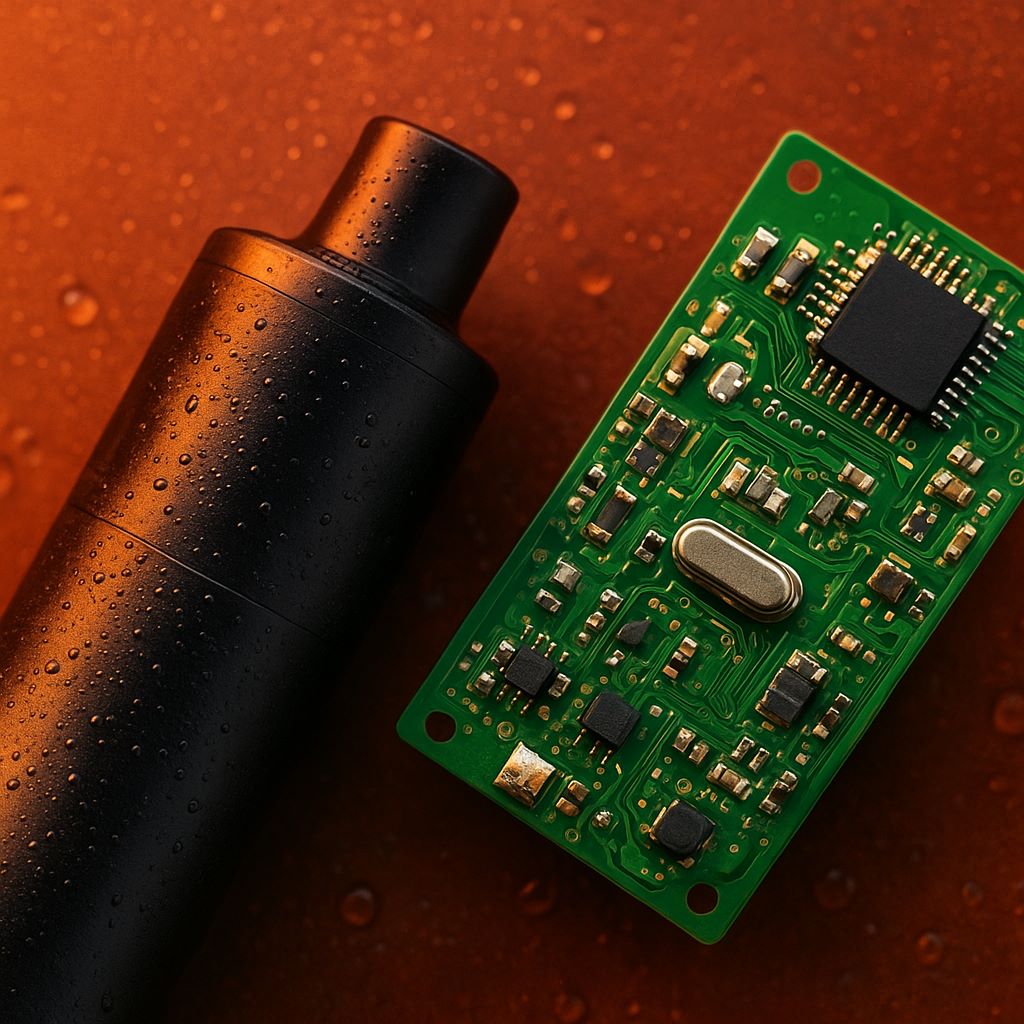
For next-generation vaporizers, long-term PCB reliability is crucial. In high-humidity and high-temperature environments, poor design choices can result in malfunctions, reduced product lifespan, and inconsistent user experiences. RIMYI specializes in custom vaporizer circuit boards engineered for challenging operating conditions, ensuring stable performance and compliance with strict industry standards.
However, achieving reliable PCB operation under these environmental stresses requires deep expertise in materials, design optimization, thermal management, and protective coatings. This article examines critical engineering principles.
1. Environmental Challenges Facing Vaporizer Circuit Boards
Vaporizer PCBs operate near heating elements and e-liquid reservoirs, making them constantly exposed to high humidity, fluctuating temperatures, and potential condensation. Without proper design safeguards, these conditions may cause:
-
Moisture penetration, leading to short circuits or corrosion.
-
Material delamination, weakening of mechanical strength.
-
Thermal stress fatigue results in micro-cracks within solder joints.
-
Electrical leakage due to condensed micro-water films.
For reliable performance, PCB engineers must balance heat resistance, moisture protection, and signal integrity. RIMYI addresses these demands with comprehensive design frameworks tailored to vaporizer devices.
2. Material Selection: The Foundation of PCB Reliability
2.1 High-Temperature Substrates
When working near atomizers, conventional FR-4 substrates may deform above 130°C. RIMYI uses high-Tg laminates and polyimide-based boards, supporting stable dielectric properties even under sustained high-heat conditions.
-
Benefits of High-Tg Substrates:
-
Enhanced thermal stability and minimal warping.
-
Improved mechanical integrity under temperature cycling.
-
Better resistance to delamination in vapor-rich environments.
-
2.2 Moisture-Resistant Laminates
Humidity accelerates ion migration and electrical leakage within PCBs. RIMYI integrates low-moisture-absorption substrates, including specialized PTFE composites and modified epoxy resins. These materials keep dielectric constants stable and preserve signal quality under damp conditions.
3. Protective Coatings: Shielding Against Moisture and Corrosion
Protective coatings significantly improve PCB durability in harsh conditions. RIMYI recommends applying conformal coatings designed for e-cigarette environments:
-
Silicone-based coatings for superior water repellency.
-
Acrylic coatings to protect against salt spray and chemical exposure.
-
Nano-ceramic protective layers to enhance hydrophobicity and insulation.
These coatings are applied with precision spray techniques that ensure uniform coverage while avoiding clogging micro-sensor pathways. Combined with optimized venting strategies, this approach balances protection with airflow control.
4. Optimizing PCB Layout for Thermal and Moisture Control
4.1 Strategic Component Placement
High-current drivers, MCU controllers, and MOSFET switches generate localized hotspots. Improper placement causes thermal stacking, reducing component reliability. RIMYI’s design methodology ensures:
-
Heat-generating components are isolated from sensors.
-
Dedicated thermal relief zones guide heat dissipation.
-
High-density regions leverage copper pours for better conduction.
4.2 Controlled Airflow Channels
Since vaporizers create moist air environments, RIMYI engineers integrate airflow management into the PCB housing design. These channels redirect condensation away from sensitive areas while preventing liquid intrusion.
5. Advanced Sensing and Protection Algorithms
In addition to hardware design, RIMYI employs sensor-driven control algorithms for environmental adaptability:
-
Temperature feedback loops automatically regulate atomizer heating.
-
Humidity monitoring detects excessive condensation risks.
-
Short-circuit prediction systems proactively adjust power delivery.
These intelligent safeguards significantly extend PCB lifespans while maintaining consistent vapor quality.
6. Testing for Reliability in Harsh Environments
It’s custom vaporizer circuit boards through rigorous environmental testing:
-
Thermal shock testing simulates rapid heating cycles.
-
High-humidity chamber aging assesses moisture resistance.
-
Salt spray and corrosion tests ensure material robustness.
-
Accelerated life cycle simulations predict field durability.
By replicating real-world vaping conditions, RIMYI guarantees that its solutions meet international safety and reliability benchmarks.
7. Integration with Custom Vaporizer Solutions
The PCB solutions are not standalone products; they’re optimized for seamless integration within e-cigarette ecosystems:
-
Compact form factors enable sleek industrial designs.
-
High-speed interfaces ensure stable communication between sensors, batteries, and coils.
-
Energy-efficient architectures prolong battery life without sacrificing output power.
Our custom designs help brands deliver high-performance vaporizers that users trust.
Conclusion
Ensuring PCB reliability in high humidity and high temperature environments demands advanced materials, intelligent layouts, and robust protective strategies. For vaporizer manufacturers, RIMYI’s custom circuit board solutions offer a comprehensive approach to these challenges.
By integrating thermal engineering, moisture control, sensor-driven algorithms, and rigorous environmental validation, RIMYI empowers brands to deliver durable, safe, and efficient vaping experiences. In a competitive market, long-term reliability is no longer optional — it’s a strategic differentiator.