

The evolution of the vaping industry has made rechargeable devices a dominant trend. At the core of these devices lies the rechargeable vape PCBA, a sophisticated electronic circuit that manages power, safety, and user interaction. For manufacturers and designers, understanding the essential factors in rechargeable vape PCBA customization is crucial to ensuring both product reliability and user satisfaction.
1. Power Efficiency and Battery Management
Efficient energy use defines the success of a rechargeable vape device. Since vapes rely on compact lithium-ion or lithium-polymer batteries, power management systems must maximize energy output while minimizing loss.
The PCBA design should include high-precision voltage regulators and low-power microcontrollers to ensure consistent performance. Moreover, intelligent charging circuits must prevent overcharging and overheating, which are common causes of device failure. By adopting advanced power-saving algorithms and smart cutoff systems, RIMYI’s rechargeable vape PCBA solutions achieve prolonged battery life without compromising vapor production.
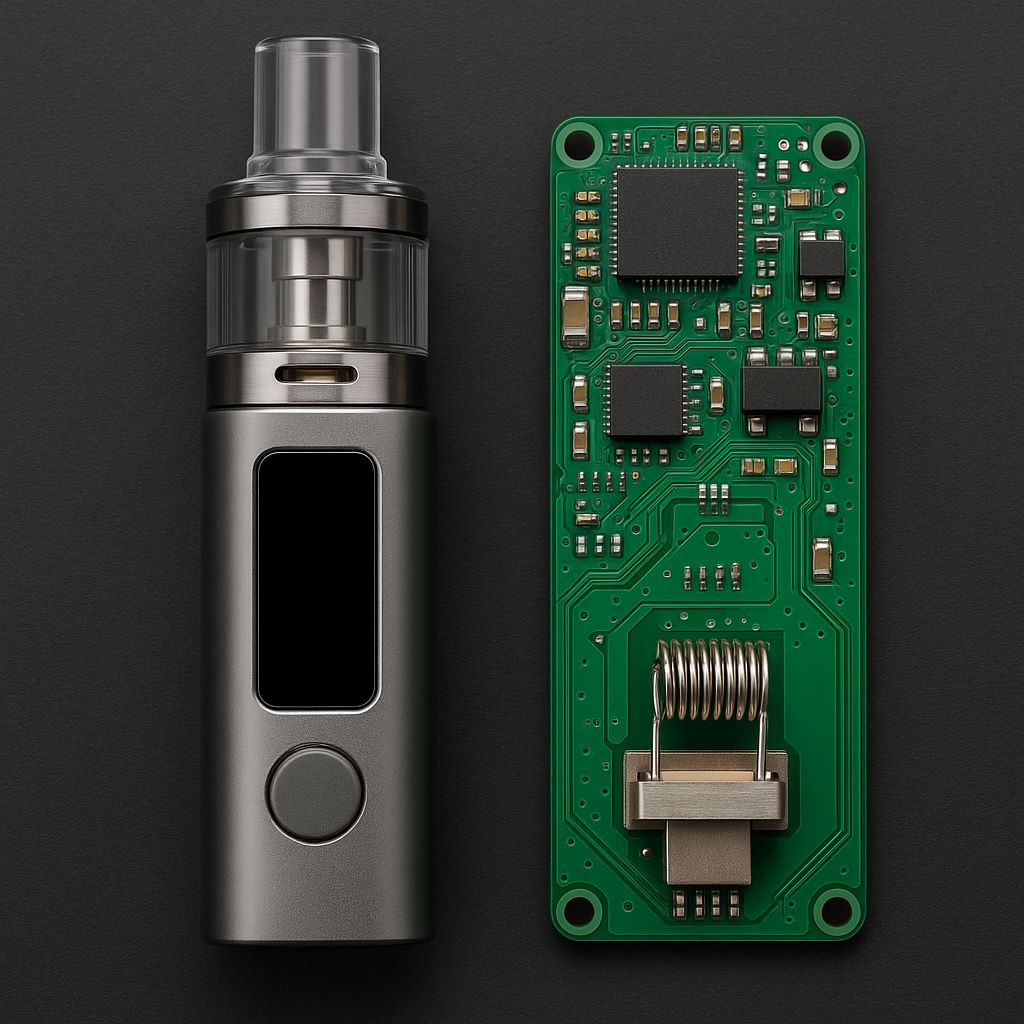 2. Thermal Control and Component Protection
Thermal stability directly affects both safety and device lifespan. During the heating process, the coil and circuit generate significant heat, which can impact sensitive electronic components. Therefore, the PCBA layout must optimize heat dissipation through thermal vias, copper pours, and well-positioned grounding planes.
Furthermore, integrating temperature sensors and protection ICs ensures that the device automatically regulates temperature to avoid combustion or circuit damage.
3. Circuit Layout and Component Placement
In rechargeable vape PCBA customization, the physical arrangement of components is critical. Compact designs require precise placement to reduce electromagnetic interference (EMI) and improve current flow. The routing strategy should minimize signal crosstalk, particularly between the power section and the microcontroller.
High-current paths must be wide and short, while control signals should be routed separately. Moreover, designers must ensure that connector placement aligns with enclosure structures, ensuring seamless integration with the vape housing.
4. Safety and Compliance Standards
Safety regulations vary across global markets, making compliance an essential design factor. Rechargeable vapes must adhere to standards related to battery safety, electromagnetic compatibility (EMC), and material toxicity.
RIMYI incorporates multiple safety layers in its rechargeable vape PCBA design, including overcurrent, overvoltage, and short-circuit protection. Additionally, all materials used are RoHS-compliant, ensuring environmentally responsible manufacturing. Testing processes simulate real-world use to verify that each PCBA can withstand stress, vibration, and environmental fluctuations.
5. Microcontroller Programming and Smart Features
The microcontroller acts as the brain of the vape PCBA, governing all device functions—from puff detection to LED indicators. With tailor-made firmware, brands can introduce custom user experiences, such as adjustable wattage, draw activation sensitivity, and even Bluetooth connectivity for app-based control.
6. Connectivity and Future Expandability
Modern rechargeable vapes are evolving into smart connected devices. Integrating Bluetooth or wireless communication modules allows users to track consumption habits or receive firmware updates.
Designing the rechargeable vape PCBA with modular expandability in mind enables manufacturers to upgrade or customize features without altering the entire circuit. This adaptability supports evolving consumer demands and reduces production costs for future iterations.
 7. Manufacturing Precision and Quality Control
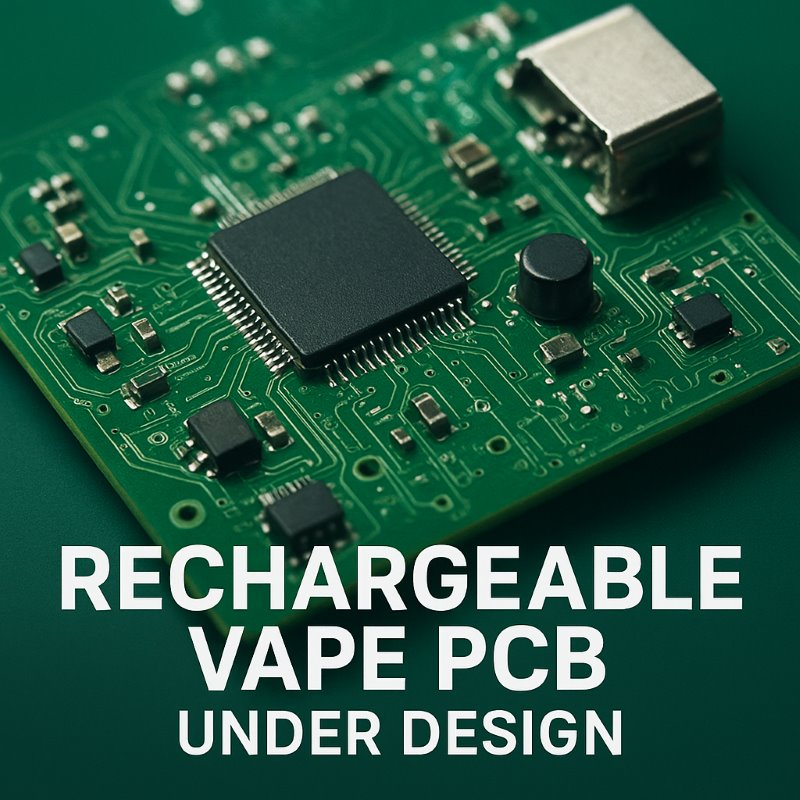
Consistency in PCBA manufacturing is essential for large-scale production. Automated surface-mount technology (SMT) assembly ensures precise component placement and soldering quality.
Every rechargeable vape PCBA undergoes multi-stage quality testing—visual inspection, functional testing, and stress simulation—to guarantee stable performance. Stringent reliability testing ensures that even after thousands of charge cycles, the circuit remains efficient and durable.
8. Environmental Considerations and Sustainability
As environmental awareness grows, sustainable manufacturing practices have become a priority. Rechargeable vape devices reduce battery waste compared to disposable alternatives. However, eco-friendly design must extend to the PCBA materials and energy consumption during production.
Promotes green manufacturing by using halogen-free laminates, lead-free solder, and recyclable packaging for electronic components. Our low-power vape PCBAs not only extend battery life but also minimize carbon footprint, aligning with global sustainability goals.
9. User Safety and Interface Experience
Ultimately, user safety and comfort define product success. The PCBA must integrate intelligent detection systems that recognize short circuits, dry burns, and puff duration limits. The user interface—whether button-based or automatic draw-activated—should respond instantly and accurately.
To enhance user experience, LED indicators, vibration feedback, or OLED displays can be embedded into the board design. These features create a modern and intuitive interaction, reflecting the shift toward smart vape customization in today’s market.
10. Summary: Engineering Reliability Through Customization
The design of a rechargeable vape PCBA involves balancing electrical precision, mechanical fit, and user expectations. Each factor—from thermal management to firmware optimization—directly affects the reliability, safety, and performance of the final product.
RIMYI’s approach to rechargeable vape PCBA customization combines years of engineering expertise with deep insight into vaping industry standards. Through a modular design, low-power architecture, and rigorous testing, RIMYI helps brands achieve durable, compliant, and user-friendly vape solutions.
As vaping technology continues to evolve, the importance of a robust and adaptable PCBA will only grow. By focusing on intelligent integration and quality assurance, manufacturers can create next-generation rechargeable devices that redefine both safety and innovation in the vaping market.