

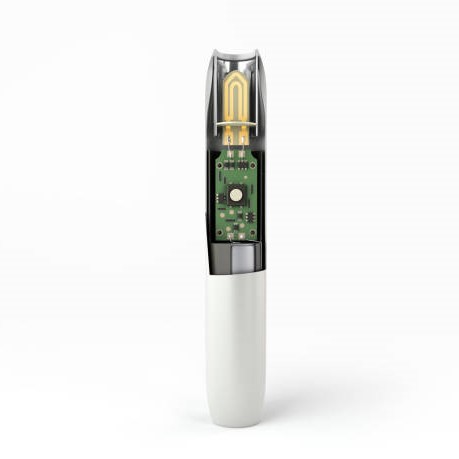
In the modern vapor industry, safety engineering is the ultimate differentiator between an elite product and a liability. As disposable vapes and pod systems scale up in battery capacity and heating efficiency, the thermal energy generated within a compact enclosure increases exponentially. Consequently, relying on a single thermal cut-off is no longer sufficient to guarantee user safety.
To prevent catastrophic thermal runaway and protect delicate circuitry, a high-quality vape PCBA utilizes a sophisticated, two-tier thermal protection network: an 85°C Over-Temperature Protection (OTP) at the board level and a 150°C Thermal Shutdown (TSD) at the silicon chip level. Understanding how these two distinct thresholds operate in synergy reveals the depth of hardware engineering required to build a truly safe vaping device.
1. Tier 1: The 85°C Over-Temperature Protection (OTP) – Preventive Shield
The first layer of defense is the 85°C Over-Temperature Protection (OTP), which monitors the macro-environment of the vape PCBA board surface. This system typically utilizes a dedicated Negative Temperature Coefficient (NTC) thermistor placed strategically near high-heat generation zones, such as the MOSFET switching transistors or charging management ICs.
-
The Trigger Logic: When a user takes prolonged, consecutive puffs (chain vaping) or charges the device with a high-current adapter, the ambient temperature inside the chassis rises. As the board surface hits 85°C, the NTC thermistor reports this spike back to the primary microcontroller unit (MCU).
-
The Preventive Action: Instead of shutting the device down abruptly mid-puff—which can confuse the user—the MCU executes an intelligent software mitigation strategy. It dynamically reduces the pulse-width modulation (PWM) duty cycle, effectively lowering the power output to the heating coil.
Consequently, the device cools down gracefully while remaining operational. Furthermore, if the temperature continues to climb despite power throttling, the system will temporarily lock out the firing mechanism and flash an LED warning code, giving the heat time to dissipate safely through the enclosure.
2. Tier 2: The 150°C Thermal Shutdown (TSD) – The Last Line of Defense
While the 85°C OTP is a soft, software-managed warning system, the 150°C Thermal Shutdown (TSD) is a hard, silicon-level emergency brake. This protection is embedded directly into the micro-architecture of the control chip itself, bypassing the main firmware entirely.
-
The Trigger Logic: If a critical hardware failure occurs—such as a short-circuited MOSFET that locks the current in a permanent “ON” state, or a direct battery short—the temperature at the silicon junction will skyrocket in milliseconds.
-
The Physical Action: When the internal temperature of the chip’s die reaches approximately 150°C, a built-in analog thermal sensor triggers a physical latching circuit. This mechanism instantly cuts off power to the output gates at the hardware level.
Therefore, even if the primary MCU firmware freezes or crashes due to intense heat, the TSD circuit functions independently. It acts as a fail-safe that stops the battery from entering thermal runaway, preventing melting casings, venting gases, or fire hazards.
3. The Synergy of Dual-Redundancy Engineering
The true value of modern vape safety design does not lie within either of these systems alone, but in their collaborative, tiered interaction. They form a complementary preventive-and-defensive ecosystem.
[Normal Operation]
       │
       ▼ (Chain Vaping / High Load)
[85°C Board-Level OTP] ───> Reduces Power Output / Software Lockout (Cooling Phase)
       │
       ▼ (Hardware Failure / Short Circuit)
[150°C Chip-Level TSD] ───> Instant Physical Power Disconnection (Absolute Fail-Safe)
By separating the thermal protection into two tiers, a high-quality vape PCBA optimizes both product longevity and consumer safety:
-
Minimizing Thermal Stress: By triggering preventive throttling at 85°C, the board prevents the delicate solder joints, lithium battery seals, and plastic housings from ever tasting the degrading effects of extreme heat. This drastically reduces the field return rate and maintains battery health over long-term cycles.
-
Zero-Latency Hardware Override: If an extreme short circuit happens, software-driven protections are often too slow to react before a battery fails. The analog nature of the 150°C TSD ensures an instantaneous hardware shutdown, isolating the failure before it propagates into an external hazard.
Technical Matrix: OTP vs. TSD Architecture
| Comparison Parameter | Board-Level OTP (Tier 1) | Chip-Level TSD (Tier 2) |
| Trigger Temperature | 85°C | 150°C |
| Monitoring Target | PCBA Surface / High-Heat Zones | Internal Silicon Die Junction |
| Mechanism Type | Software-Mediated (MCU + NTC) | Hardwired Analog Circuitry |
| Operational Goal | Prevention & Damage Control | Absolute Failure Mitigation |
| User Experience | Power throttling / LED warning flash | Total system lockout for fire prevention |
Conclusion: Engineered to Protect
In a rapidly tightening global regulatory framework, consumer safety is the foundation of brand equity.
Stop relying on single-point safety architectures or low-tier control schemes that expose your hardware to thermal overruns. Instead, leverage the dual-redundant precision of a professional vape PCBA platform featuring synchronized 85°C OTP and 150°C TSD networks. Consequently, your product line will achieve elite reliability metrics, satisfy rigorous international safety compliance standards, and offer consumers a consistently safe vaping experience from the first draw to the last.
RIMYI: Discover advanced custom PCBA design solutions today to build a hardware foundation that stands up to the heat.