

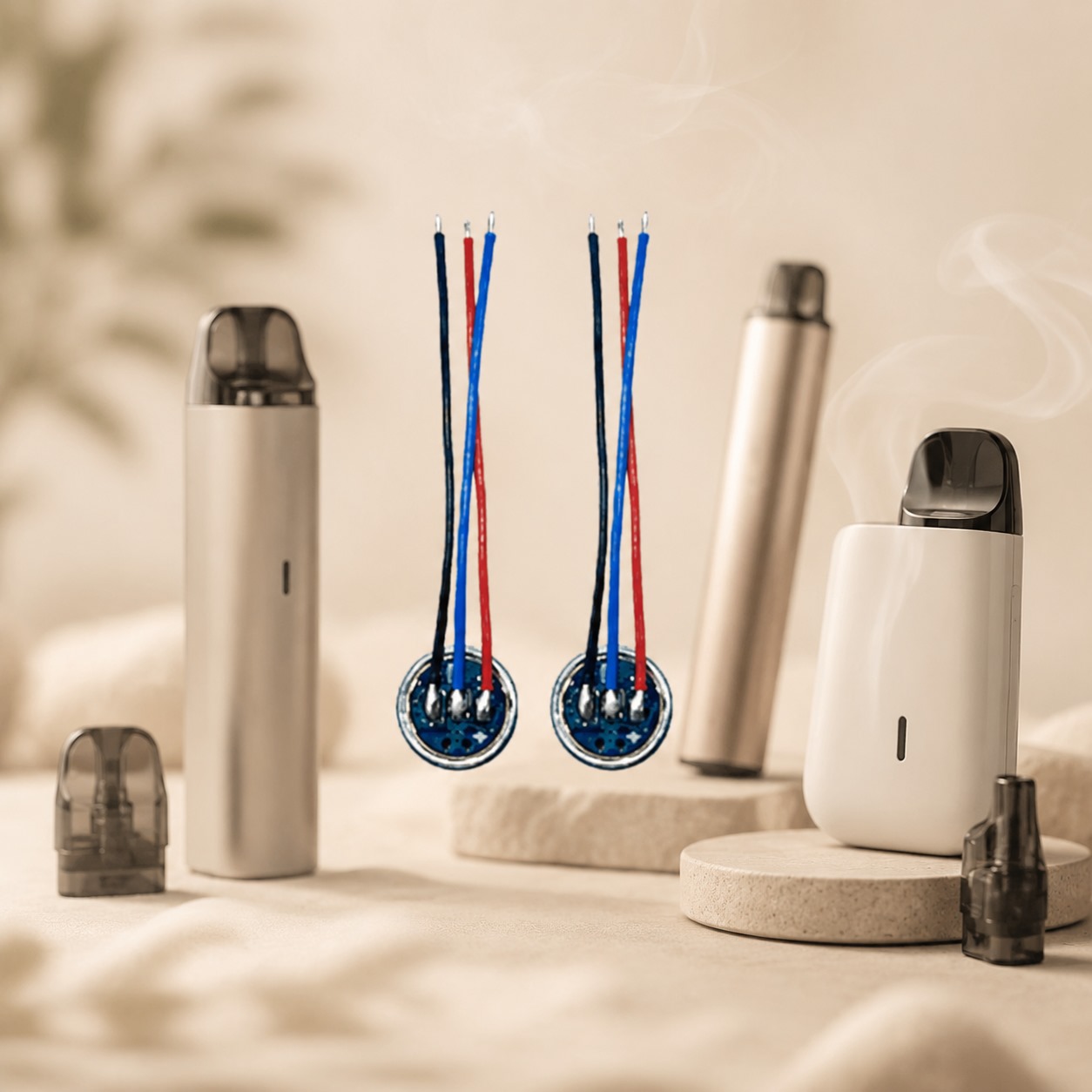
In modern vape device engineering, manufacturers must maintain stable airflow detection performance under high humidity and oil-rich environments. The airflow sensor vape system detects subtle pressure changes while it continuously operates in vapor and condensed e-liquid conditions. However, oil residue and liquid buildup often create instability, which leads to signal drift, false triggering, and reduced device reliability. To solve this challenge, engineers widely apply oil-proof film technology as a protective structure in advanced vape PCBA design.
1. E-Liquid Contamination Challenge in Airflow Sensing Systems
In compact electronic vape devices, airflow detection modules operate in a highly humid and oil-rich environment. During long-term use, e-liquid condensation and leakage frequently enter the airflow channel, which leads to unstable triggering and signal drift. In particular, the airflow sensor vape system shows high sensitivity to environmental contamination because it relies on low-pressure detection. Even a small amount of oil residue affects airflow pressure transmission and triggers false activation or delayed response. Therefore, contamination control becomes a critical requirement in modern vape PCBA design, especially for high-frequency disposable and refillable devices.
2. Working Mechanism of Oil-Proof Film Protection
To solve this issue, engineers introduce oil-proof film as a micro-structural barrier inside the airflow channel. This membrane separates liquid particles from air molecules while still allowing smooth airflow transmission. The membrane uses hydrophobic micro-porous materials. As air passes through the structure, the surface blocks liquid droplets and prevents them from entering the sensing chamber. As a result, the airflow sensor vape system maintains stable pressure detection and avoids condensation buildup or oil infiltration. In addition, this structure keeps the sensor chamber dry, which reduces long-term contamination risk and improves signal consistency.
3. System Stability Improvement After Oil-Proof Integration
After engineers integrate oil-proof film, the airflow detection system shows significantly improved stability in real applications. Firstly, the system reduces false triggering caused by liquid interference. Secondly, the response curve of inhalation detection becomes more linear and predictable. The airflow sensor vape module also reduces calibration drift over time. This benefit becomes especially important in high-usage environments where repeated inhalation cycles normally degrade sensor accuracy. Furthermore, RIMYI optimizes airflow structure and sealing design so the oil-proof layer works in coordination with the sensing chamber instead of restricting airflow sensitivity.
4. Structural Design of Airflow Sensor with Oil-Proof Film
From a PCBA engineering perspective, engineers place the oil-proof film between the airflow inlet and the pressure sensing cavity.
This layered design includes:
- Air inlet structure
- Oil-proof membrane layer
- Pressure sensing chamber
- Signal processing PCB module
This architecture allows the airflow sensor vape system to maintain a compact size and still achieve reliable isolation from liquid contamination. In addition, engineers optimize the airflow channel to reduce turbulence and ensure stable pressure transmission to the sensor unit.
5. Manufacturing Process and Reliability Control
During mass production, engineers strictly control membrane permeability and sealing alignment. Any deviation may cause unstable airflow response or reduced sensitivity. Therefore, production teams apply strict quality control in material selection, lamination process, and final assembly testing. At RIMYI, engineers test each airflow module through airflow calibration, leak resistance testing, and continuous activation simulation. As a result, the airflow sensor vape products maintain high production consistency and low failure rates, which support large-scale OEM and ODM applications.
6. Application Value in Modern Vape Device Design
With increasing demand for compact and high-performance vape devices, engineers now treat oil-proof film integration as a standard solution to improve product reliability. This structure allows manufacturers to design smaller modules without sacrificing sensing accuracy or durability. At the same time, it reduces after-sales failures caused by contamination issues. For this reason, RIMYI continues to optimize oil-proof airflow sensing solutions to meet global vape hardware manufacturing requirements.
7. Conclusion
Oil-proof film technology significantly improves the reliability of airflow sensing systems in vape devices. It blocks e-liquid contamination while it preserves airflow sensitivity, which ensures stable signal output and long-term performance. In modern PCBA design, the airflow sensor vape module with oil-proof protection becomes a key solution for improving device stability, reducing failure rates, and supporting scalable manufacturing.
With continuous engineering optimization from RIMYI, this structure will remain a core direction for next-generation vape airflow sensing systems.